Top Employee Benefits for Small Businesses in 2026
Last updated on 24 May 2026

Many UK SMEs struggle to match the salaries offered by larger employers. Larger companies often have more money, bigger HR teams, and well-developed reward programmes. Still, small businesses can stand out by offering flexibility, a caring culture, and real support that helps employees feel valued every day.
There is a clear business reason to focus on benefits. Only 40% of UK workers are happy with their workplace benefits, and 41% say rewards are a top priority when picking a new employer. For small businesses, this is both a challenge and an opportunity. A good benefits package does not have to be costly or complicated. Many valuable benefits, such as flexible working, recognition, wellbeing support, and everyday savings, can be offered in simple, affordable ways.
This guide looks at how small businesses can create employee benefits that are affordable, relevant, and truly helpful. You will learn which benefits matter most in 2026, how to design a package that fits your employees’ needs, and how to ensure your investment delivers value to both your people and your business.
What are employee benefits for small businesses?
Employee benefits are the extra support, rewards, and services employees receive in addition to their salary. For small businesses, these often include legal requirements like workplace pensions, holiday pay, statutory sick pay, and family leave. They can also offer extra help to boost health, wellbeing, financial security, and work-life balance.
A small business benefits package could include flexible working, health and wellbeing support, mental health services, employee discounts, savings, recognition and rewards, learning opportunities, family-friendly policies, and insurance, such as life or medical cover.
These benefits do not have to be costly or complicated. Many of the most appreciated options for small teams, like flexible hours, hybrid work, recognition, and extra leave, are affordable but make a big difference.
If you lead HR in a small business, your aim is not to copy what big companies offer. Instead, focus on building a benefits package that is useful, realistic, and fits your team. HiBob says benefits are more than just basics—they show your company’s culture and let employees know what support they can count on every day.
The best employee benefits package is one that aligns with your team, budget, and values. Whether you begin with flexible working, mental health support, healthcare, or financial wellbeing tools, what matters most is picking benefits your employees will truly understand, use, and appreciate.
What employee benefits are required by law in the UK?
Small businesses should start by double-checking that they meet all legal requirements before offering extra benefits. In the UK, employers have to provide a workplace pension through auto-enrolment for eligible staff, including minimum contributions. They also need to give paid holiday, statutory sick pay for those who qualify, and statutory family leave and pay, such as maternity, paternity, and adoption leave for employees who meet the criteria.
Carer’s leave is another legal requirement. It allows eligible employees to take up to one week of unpaid leave each year to care for a dependant with a long-term care need. Since rules and eligibility can change, HR leaders should always check the latest UK government guidance before sharing figures or updating policies.
Why should small businesses offer employee benefits?
Employee benefits can really help small businesses attract, support, and keep their staff. For many SMEs, benefits are more than just a bonus. They are a practical way to compete for talent, boost wellbeing, and create a workplace where people want to stay.
To attract and retain talent
Small businesses might not always match the salaries, bonuses, or big perks that larger companies offer. However, they can stand out by giving benefits that are useful, personal, and relevant.
Employee benefits are especially helpful for smaller businesses that cannot yet afford the highest salaries. They give employers another way to reward and support their teams.
Benefits also help keep employees. A recent study found that 71% of employees would leave their current job for better pay and benefits. Data shows that 32% would leave for better benefits, and 53% plan to look for a new job in the next year.
In small businesses, every team member matters, so losing good people can be expensive. Offering good benefits helps employees feel valued and gives them more reasons to stay and grow with the business.
To improve engagement and productivity
The right benefits can also help employees feel more engaged.
When employees know their employer cares about their wellbeing, growth, and work-life balance, they are more likely to feel motivated and loyal. Benefits can boost engagement, productivity, and effort, helping people feel more connected to their work.
Flexible working is a good example. Research reviewed by the UK Parliament found that remote and hybrid working can help employee wellbeing, self-reported productivity, job satisfaction, and work-life balance. However, it requires careful management to avoid problems such as longer hours or feeling disconnected from the team.
To reduce burnout and sickness absence
Benefits can also help prevent burnout and lower sickness absence. For example, enough time off and mental health support can reduce burnout. This is important because small teams often feel the effects of absence faster than bigger organisations.
There is also a clear business reason. UK businesses lose over £100 billion each year because of workplace sickness. Other research found that the hidden annual cost of sickness has risen to £103 billion, driven by both absence and lower productivity among people working while unwell. Recent UK government analysis also estimates that poor workplace health costs employers about £85 billion each year.
Benefits such as mental health support, virtual GP access, health cash plans, wellbeing days, and flexible working can help employees access support sooner and better manage their wellbeing.
To build a stronger culture
Finally, benefits help shape your company culture. Employee benefits can strengthen culture, support wellbeing, and help people feel valued and motivated to grow with the team. For small businesses, this matters even more because the benefits you offer show what kind of employer you want to be.
The best employee benefits for small businesses in 2026
The best employee benefits for small businesses are not always the priciest.
In 2026, employees want support that makes work and life easier, like flexibility, healthcare, mental wellbeing, financial security, and a workplace where they feel valued. For small businesses, a good benefits package should meet real employee needs while staying within budget.
- Flexible and hybrid working
Flexible working is one of the most valuable benefits a small business can offer. It is usually low-cost but makes a big difference. It helps employees manage caring responsibilities, reduce commuting, support their health, and achieve a better work-life balance.
A better work-life balance can be so good for your health that some people who work flexibly have heart health similar to what they had a decade ago.
For small UK businesses, flexibility can mean flexible start and end times, hybrid work, compressed hours, work-from-home days, part-time roles, or a set number of 'work from anywhere' days each year. It is important to clearly define what flexibility means, so employees know their options and managers can be fair.
When flexible working is managed well, it can boost performance and results. Employees who are trusted to work in ways that fit their roles are more likely to feel motivated, focused, and loyal to the business.
- Health insurance and health cash plans
Healthcare benefits are especially valuable in small teams, where one person’s absence can quickly impact workloads, customer service, and business operations.
Private medical insurance helps employees get private diagnosis and treatment for eligible conditions, which can reduce waiting times and time away from work.
While a full private medical insurance may not fit every small business’s budget, a health cash plan can become a more affordable option. Yes, it does not cover private treatment in the same way, but it lets employees claim money back for everyday healthcare costs like dental check-ups, eye tests, glasses, physiotherapy, and other routine care.
HR leaders do not have to choose all or nothing. A small business can start with a health cash plan or virtual healthcare support, then add more coverage as the company grows.
- Virtual GP and everyday healthcare support
Virtual GP services give employees quicker and more convenient access to medical advice. This is especially helpful for small businesses that cannot afford full private healthcare but still want to offer useful health support.
For employees, online GP appointments make it easier to get advice while managing work, childcare, and other duties. For businesses, early access to support can help reduce absences and prevent small health issues from becoming bigger problems. Employees know what it is, when to use it, and how it can help them, making it a strong option for small businesses seeking simple, high-impact benefits.
- Wellness programmes
Wellness programmes are quickly becoming a top employee benefit for small businesses in 2026.
Employees now want more than just occasional perks that feel disconnected from their daily work. They are looking for practical and accessible support to help manage stress, build healthier habits, and improve their overall wellbeing. For small businesses, this might mean offering fitness classes, gym or studio memberships, nutrition advice, mindfulness sessions, mental health resources, walking challenges, digital wellbeing tools, financial education, or social activities.
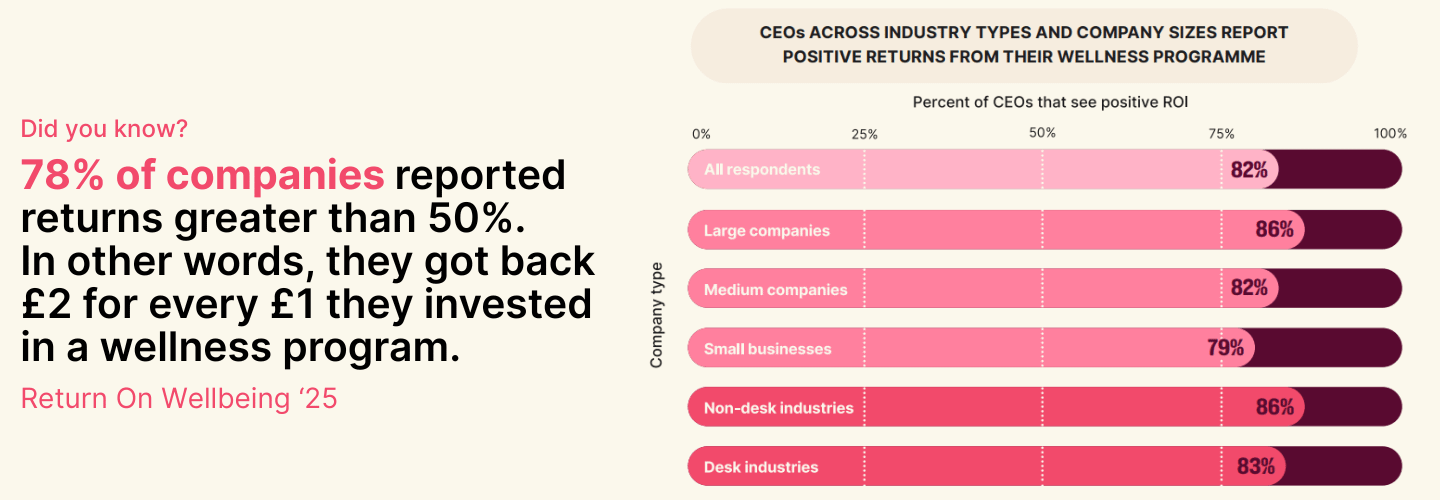
This is important because employee wellbeing is now strongly connected to how people feel and perform at work. According to our reports, 86% of employees said wellbeing at work matters as much as salary, and 89% said they do better when they focus on their wellbeing.
Our study also found that employees with access to structured wellness programmes have better mental and physical health, sleep, and nutrition. Still, only 14% of companies offer these programmes, which shows there is a clear gap between what employees want and what employers provide.
We recommend you reading: How do employee benefits schemes improve wellbeing?
For small businesses, the best wellness programmes are flexible, easy to use, and fit real working patterns. This means offering choices that work for remote, hybrid, desk-based, and non-desk employees, rather than just one benefit that helps only some people. There is also a strong business reason to invest: Our Return on Wellbeing report found that 76% of UK CEOs see a positive return on investment from their wellness programmes, and 47% said these programmes have a big impact on productivity.

Get started on your company's wellbeing journey
Work-life wellness with Wellhub benefits everyone - healthier people, happier companies, proven savings.
- Mental health support and therapy
Mental health support should be a key part of any modern employee benefits package. Stress, anxiety, burnout, and personal challenges all affect how people feel and work. In small businesses where teams work closely, the impact is quickly evident.
Support can include counselling, therapy, employee assistance programs, mental wellness apps, wellbeing days, manager training, and confidential support services. The goal is not to make managers into therapists, but to ensure employees know where to get help when they need it.
Access to good therapy is one of the best ways to support employee mental health. It gives people a private space to talk, work through challenges, and get professional advice before problems get harder to handle.
- Life insurance and income protection
Protection benefits give employees and their families financial peace of mind during tough times. They might not be used often, but they show that the business cares about employees’ long-term security. For example, income protection provides ongoing support if an employee is unable to work due to illness or injury. Critical illness cover pays a lump sum if an employee is diagnosed with a serious covered illness.
For small businesses, these benefits help build trust and loyalty. They show employees that support goes beyond daily perks and covers serious life events where financial protection is most important.
- Employee discounts and cost-of-living support
Financial wellbeing remains a major concern for many employees. Small businesses can help by offering practical support like employee discount schemes, cashback, salary sacrifice options, and everyday savings.
Discount schemes help employees save money on everyday costs like groceries, clothing, travel, fitness, and leisure. Other helpful options are cycle-to-work schemes, buying extra annual leave, cashback platforms, and access to financial education.
These benefits can be especially powerful because they support employees outside work. Even small savings can make a difference when household budgets are under pressure. For employers, they can also be relatively simple to introduce compared with more complex or expensive benefits.
- Enhanced leave and family-friendly benefits
PTO is one of the most valuable benefits a small business can give. Enhanced leave and family-friendly policies help employees handle important life events without having to choose between work and family.
This could include better maternity and paternity leave, inclusive parental leave, child sick leave, birthday leave, extra annual leave, holiday purchase schemes, or sabbaticals. These benefits support employees at all life stages, from new parents and carers to those who just need more time to rest.
For HR leaders, it is important to create policies that are clear, fair, and realistic for the business size. Even small changes to leave can help employees feel more trusted, respected, and supported.
- Learning, development, and recognition
Not all benefits have to be about health or money. Many employees want to grow, feel valued, and see a future with the business. For small businesses, learning and recognition can be affordable, personal, and make a big cultural impact.
This might include a learning budget, mentoring, paid training time, online courses, team lunches, peer recognition, employee awards, or simple thank-you rewards. These benefits show employees their work matters and that the business wants to invest in their future.
Recognition is particularly important in small teams, where people often take on broad roles and go beyond their job descriptions. A regular, genuine thank you can have a bigger impact than many employers realise.
- “Perk of the job” benefits
One of the biggest strengths of small businesses is their personality. They can often offer benefits that feel more genuine and closely tied to the company's work.
These 'perk of the job' benefits are connected to the business’s product, service, mission, or culture. For example, a food brand might give away products, a fitness company could offer gym access, an events business might provide tickets, and a purpose-driven company could offer volunteering days or charity matching.
These benefits do more than add value. They bring the company’s culture to life and help employees feel part of something distinctive. For small businesses, that can be a real competitive advantage.
Get more in-depth: Top 15 employee benefits in the UK for 2026 (a guide for employers)
How to build an employee benefits package for a small business?
You do not need to introduce every benefit right away. For small businesses, it is better to focus on what your employees really need, what your business can afford, and to keep things straightforward. A strong benefits plan should support your team, help you retain great people, and reflect the kind of employer you want to be.
Step 1: Start with employee needs
Before choosing benefits, ask your employees what would actually help them. There is little value in offering benefits that people do not understand, use, or care about. For small businesses, this is especially important because budgets are limited and every investment matters.
Start by collecting feedback through a short, anonymous survey, one-on-one conversations, team discussions, or insights from onboarding and exit interviews. Ask employees what would make the biggest difference in their work life, what support they are missing, and which benefits they would really use.
It is also useful to consider your team's different profiles. Younger employees might be interested in learning about budgets, financial tools, social events, or flexible work options. Parents and carers may need family-friendly leave, flexible hours, or emergency childcare. People with long commutes may prefer hybrid work, while those with health concerns might appreciate virtual GP access, mental health support, or a health cash plan.
The goal is not to please everyone with every benefit. Instead, focus on choosing benefits that meet your team’s most important needs.
Step 2: Review your legal basics
Before adding extra perks, make sure the legal foundations are in place. In the UK, this includes workplace pension auto-enrolment, holiday entitlement, statutory sick pay, maternity, paternity, adoption, and shared parental leave, as well as other statutory employment rights.
These basics may not seem exciting, but they are essential. They also help build employee trust. If employees do not know their main entitlements or if policies are hard to find, the rest of your benefits package may not feel reliable.
Make sure statutory benefits are clearly explained in contracts, handbooks, onboarding materials, and internal policies. It is also helpful to check that managers understand these basics, since employees often go to them first with questions.
Once you have the essentials in place, look for ways to improve them. For example, a small business might offer more generous sick leave, enhanced parental leave, or allow employees to buy extra holiday.
Step 3: Define your budget
Next, work out what your business can realistically afford. The cost of benefits depends on your company’s size, industry, team makeup, location, and the types of benefits you choose.
It is helpful to sort benefits into three groups: free or low-cost, mid-cost, and higher-investment.
- Free or low-cost options include flexible working, recognition, volunteering days, birthday leave, mentoring, or better career development talks.
- Mid-cost benefits might be employee discounts, a health cash plan, virtual GP access, an employee assistance program, or a learning budget.
- Higher-investment options could be private medical insurance, income protection, life insurance, or higher pension contributions.
Small businesses do not need to add every benefit at once. It often works better to start with one or two benefits that meet clear employee needs. This makes the investment easier to manage and gives HR time to see what works before adding more.
You might also like to read: The Benefits Budget Myth: Why ‘Across-the-Board Cuts’ Usually Increase Total Cost
Step 4: Choose benefits based on employee needs
Rather than making a random list of perks, group benefits by the needs they address. This makes your package easier to design, explain, and review.
A balanced small business benefits package might include support across six areas:
- Overall health: cash plan, virtual GP, or private medical insurance.
- Mental and emotional wellbeing: counselling, an employee assistance programme, mental health apps, or manager training.
- Financial wellbeing: discounts, cashback, salary sacrifice schemes, or financial education.
- Flexibility: hybrid working, flexible hours, compressed hours, or work-from-anywhere days.
- Family support: enhanced parental leave, child sick leave, carer-friendly policies, or emergency leave.
- Growth and recognition: training budgets, mentoring, peer recognition, employee awards, or regular development conversations.
This holistic approach helps employees understand the purpose of each benefit. It also helps HR spot any gaps. For example, you might notice that you offer many social perks but little health or financial support.
Step 5: Benchmark against competitors
Small businesses should also look at what similar employers are offering. Benchmarking helps you see what is standard in your industry, what candidates expect, and where your business can stand out.
This does not mean you need to copy bigger companies. A small business might not offer the same private healthcare, bonuses, or pension contributions as a large company. However, you can compete by offering flexibility, quicker access to leaders, a more personal culture, meaningful recognition, or benefits connected to your company’s mission.
To benchmark, review competitor job ads, talk to recruiters, use salary and benefits reports, ask candidates what they value, or get feedback from new hires. Look for trends, not just one-off examples. If most competitors offer hybrid work, not offering it could make hiring harder. If few offer enhanced parental leave or mental health support, those benefits could help you stand out.
The goal is to understand the market and then create a package that is both competitive and true to your business.
Step 6: Keep administration simple
A benefits package should be easy to manage. If employees cannot find, access, or understand their benefits, few will use them. If HR or operations have to do everything manually, managing benefits can quickly become too time-consuming.
Small businesses should plan for administration from the beginning. Decide who will handle enrolment, how employees will access benefits, how payroll will be managed, how new starters will be added, what happens when someone leaves, and how employees will find out what is available.
Where possible, centralize benefits information, employee access, communications, enrolment, and payroll reporting. You might use a benefits platform, HR system, intranet page, or a simple shared guide. The best solution depends on your business’s size and needs.
The goal is to keep things easy. Employees should not have to search through old emails or ask several people to find out what support is available. A clear, simple system makes benefits easier for everyone to use and for HR to manage.
Step 7: Communicate benefits clearly and make them accessible
Offering employee benefits is just the beginning. For these benefits to truly help, employees need to know what is available, how to use it, and how it fits into their daily lives. Even the best-looking benefits package can lose its impact if people forget about it, struggle to use it, or do not see its value.
Begin by sharing information about benefits during onboarding. New employees usually pay close attention to company details in their first weeks, so this is a great time to explain what support is available and how to use it. After that, provide a straightforward benefits guide that clearly explains each benefit, including who it is for, when to use it, and where to find it.
Keep communicating about benefits year-round. Send regular reminders through emails, team meetings, newsletters, or wellbeing campaigns. Managers can help by providing relevant support during one-on-one meetings, return-to-work talks, or whenever an employee needs extra help.
It also helps to use real-life examples when explaining benefits. For example, instead of just listing an employee assistance program, explain that it can help with stress, financial concerns, family issues, or personal challenges. Instead of only naming a health cash plan, show that it can cover dental, vision, or physiotherapy costs.
To make things easier, keep all benefits information in one place, such as a platform, intranet page, or shared document. When you can, look at usage data to see which benefits employees use most and which ones might need more promotion. Ask employees at least once a year if the benefits package still feels helpful and valuable.
Common mistakes small businesses make with employee benefits
Employee benefits can help support your team and improve retention, but only if you choose and manage them carefully. Small businesses often make mistakes by trying to offer too much, copying others, or failing to match benefits to what employees really need.
Copying big-company benefit packages
What works for a big organisation might be too costly, complicated, or impersonal for a small business. The best benefits are those that fit your people, your values, and how your business operates.
Choosing benefits without asking employees
It is also a mistake to assume you know what employees want.
A benefit might sound good, but if employees do not use it, it will not be valuable. As we mentioned before, ask your team what would really help them. Short surveys, listening sessions, manager feedback, and exit interviews can all show what employees truly value.
Focusing only on flashy perks
Fun perks can be nice, but they should not replace real support.
Employees often value flexible working, healthcare, financial support, mental health services, family leave, or learning opportunities more. The best benefits are usually those that make daily life easier or give support when it is needed most.
Forgetting communication
If employees do not understand a benefit, they are unlikely to use it. Clear communication is just as important as the benefit itself. Employees need to know what is available, who can use it, how to get it, and when it can help.
Not reviewing benefits regularly
Employees' needs change over time. As your business grows, your team might become more diverse, spread out, or face new cost pressures. Review your benefits at least once a year to ensure they remain useful, affordable, and valued.
How to measure the ROI of employee benefits?
Every benefit in a small business should have a clear purpose.
Measuring ROI helps HR leaders see if their benefits package supports employees, boosts retention, and adds value to the business. The return is not always just financial. A good benefits package can also build a positive culture, increase trust and morale, and improve how employees feel at work.
Use this checklist to see if your benefits are making a real difference:
Employee retention: Check whether employees stay longer after you introduce or improve benefits. If turnover drops, especially among top performers or hard-to-replace staff, your benefits may be helping people feel more supported and loyal.
Absence rates: Keep an eye on sickness, short-term, and long-term absences. If you offer health, wellbeing, or mental health benefits, this can show if employees are getting help sooner and managing health issues better.
Benefit uptake: See how many employees are actually using each benefit. Low use does not always mean a benefit is not valuable, but it might mean employees do not understand it, cannot access it easily, or do not find it relevant.
Engagement survey scores: Use employee surveys to determine whether people feel valued, supported, and motivated. Benefits should help create a better employee experience, so changes in engagement scores can show if your package is making a difference to your culture.
Candidate feedback: Ask candidates for their thoughts on your benefits during the hiring process. This can show whether your package helps you stand out or makes you seem less competitive than other employers.
Offer acceptance rates: Track how many candidates accept job offers after seeing your full reward package. If more people accept, your benefits may make your offer more attractive.
Employee wellbeing scores: Find out how employees are feeling with pulse surveys, wellbeing check-ins, or anonymous feedback. This is especially helpful if your benefits include mental health support, flexible work, healthcare, or financial wellbeing tools.
Productivity indicators: Look at performance measures such as project delivery, customer satisfaction, work quality, and manager feedback. Benefits should help employees do their best, but remember to check productivity along with wellbeing data.
Exit interview themes: Check for common reasons people leave. If they mention poor support, insufficient flexibility, weak development, or better benefits at other companies, this can indicate where your package needs improvement.
The goal is not to show that every benefit brings an instant financial return. It is to find out which benefits work, which need improvement, and how your whole package supports both your business and your employees’ wellbeing.
Create benefits that people truly value
Small businesses do not need large budgets to offer meaningful employee benefits. The key is to choose support that is practical, relevant, and truly helpful for employees.
The best benefits packages are not about following trends or offering one-time perks. They focus on real people, real needs, and the workplace culture you want to build.
Well-designed employee benefits help small businesses attract talent, keep valued employees, improve wellbeing, reduce avoidable absences, and build trust. They also show employees that their employer understands the pressures they face at work and at home, including health, family, finances, and work-life balance.
Employee wellbeing should be at the heart of your benefits strategy. When people have regular access to wellbeing support, they are more likely to build healthy habits, manage stress, stay engaged, and feel connected at work. Wellhub helps by offering a platform that connects employees to gyms, studios, wellness apps, and community experiences, making wellbeing easier to access and more engaging.
Adding Wellhub to your benefits package lets you move beyond scattered perks and offer a strong, effective wellbeing strategy that supports healthier employees, stronger teams, and better business results.
Before adding new benefits, ask your employees what matters most to them. Review what you already offer and build a package that balances legal requirements, employee wellbeing, and your business goals.
Want to learn more? Get your free quote here.
Category
Share

The Wellhub Editorial Team empowers HR leaders to support worker wellbeing. Our original research, trend analyses, and helpful how-tos provide the tools they need to improve workforce wellness in today's fast-shifting professional landscape.
You May Also Like

The Ultimate Guide to Small UK Business Wellness Programmes in 2026
Boost retention, cut costs, and build resilience with simple wellness strategies designed for small businesses working with lean budgets.

See how to reduce employee health insurance costs | Qualidade de vida, gestão de pessoas e conteúdo para RH
It is important to offer employees a good health insurance plan, although it may not be mandatory in many sectors. Such benefits bring peace of mind and allow employees to focus on the job, not to mention the motivation factor which attracts and retains talents. Moreover, health is wealth. The wise saying makes sense, particularly […]

6 Ways Corporate Team Building Exercises Can Improve Employee Productivity | Qualidade de vida, gestão de pessoas e conteúdo para RH
Why should companies invest in team building? It is like asking why people should invest in their staff; it’s about increasing engagement from staff, in the pursuit of increased productivity which will ultimately provide the sought after, return on investment. Happy & engaged staff make for a better, more productive workplace. The benefits of team […]