How do employee benefits schemes improve wellbeing?
Last updated on 2 Sept 2026

Employee benefits can do far more than make a job offer look attractive. When well-designed, an employee benefits scheme can improve employee wellbeing, support work-life balance, strengthen employer branding, and help UK companies retain healthier, more engaged teams.
But simply offering benefits is not enough. A long list of perks will not improve wellbeing if employees do not understand them, value them, or have the time and flexibility to use them. Today’s workforce expects practical support across physical health, mental wellbeing, financial security, and everyday life. For employers, that means benefits need to be relevant, inclusive, easy to access, and aligned with the way people actually work.
In this guide, we explain how UK companies can use their employee benefits scheme as a wellbeing strategy. You’ll learn what matters most for workers, why many schemes fail, which benefits can make the biggest difference, and how to design a package that supports both employees and the business.
Read on to learn how to turn your employee benefits scheme into a practical tool for improving wellbeing, retention, and workplace performance.
What is an employee benefits scheme?
An employee benefits scheme is the structured package of rewards, support, and services an organisation offers its employees in addition to their salary. For UK companies, this usually includes a mix of legally required benefits, such as workplace pension contributions and statutory leave, alongside voluntary benefits designed to support employee wellbeing, financial security, work-life balance, and long-term engagement.
In simple terms, an employee benefits scheme answers an important question: how does your company support people beyond pay? A competitive salary may attract candidates, but the right benefits package can help employees feel valued, protected, and supported in everyday life. This can make a real difference to wellbeing, retention, productivity, and employer branding.
Employee benefits vs salary
Salary is the fixed pay an employee receives for their work. Employee benefits are the additional value they receive as part of their total reward package. These benefits may not always appear directly in monthly pay, but they can have a meaningful impact on employees’ quality of life.
For example, private healthcare, a workplace pension, flexible working, mental health support, gym discounts, childcare support, or an employee assistance programme can all help reduce stress and improve day-to-day wellbeing. For many employees, especially in a competitive jobs market, these benefits can influence whether they join, stay with, or recommend an organisation.
That is why an employee benefits scheme should not be treated as a list of “nice-to-have” perks. It should be part of a wider people strategy that helps your business create a healthier, more engaged, and more loyal workforce.
Statutory vs voluntary employee benefits
Most UK employee benefits fall into two broad categories: statutory benefits and voluntary benefits.
- Statutory benefits are benefits that employers are legally required to provide. In the UK, these include workplace pension auto-enrolment, statutory sick pay, paid holiday entitlement, maternity leave, paternity leave, and other forms of statutory leave.
- Voluntary benefits are additional benefits that companies choose to offer to improve the employee experience. These may include private medical insurance, health cash plans, mental health support, flexible working arrangements, cycle-to-work schemes, salary sacrifice options, employee discounts, learning budgets, and wellbeing platforms.
The best employee benefits schemes combine both. They meet legal requirements, but they also reflect what employees actually need to feel well, motivated, and supported at work. For UK employers, this means designing benefits around real employee priorities, including financial wellbeing and mental health, as well as flexibility, inclusion, and work-life balance.
Are employee benefit schemes taxable in the UK?
Some employee benefits are taxable in the UK, while others may be tax-free, exempt, or tax-efficient depending on how they are provided. As a general rule, if an employer provides employees with expenses or benefits, the employer may need to report them to HMRC and pay tax or National Insurance on them. The exact treatment depends on the type of benefit, its value, and whether it is provided through payroll, a P11D, or a salary sacrifice arrangement.
For example, benefits such as private medical insurance, company cars, or certain vouchers may be taxable benefits in kind. Other benefits may qualify for exemptions if they meet HMRC conditions, such as some business travel, work tools, uniforms, or certain work-related expenses.
Some benefits can also be tax-efficient. Workplace pension contributions, cycle-to-work schemes, and certain salary sacrifice arrangements may offer tax or National Insurance advantages, but the rules are specific and can change. HMRC states that salary sacrifice usually involves an employee giving up part of their cash pay in return for a non-cash benefit, and the tax treatment depends on the benefit provided.
For UK employers, the safest approach is to check HMRC guidance or speak to an accountant, payroll adviser, or tax specialist before introducing or changing an employee benefits scheme. This helps ensure the company reports benefits correctly, avoids unexpected tax liabilities, and explains clearly to employees how each benefit affects their pay.
We recommend you reading: Top 15 employee benefits in the UK for 2026 (a guide for employers)
Why do employee benefits schemes matter for wellbeing, retention, and employer branding?
Employee benefits matter because they affect how people feel about their work each day. In the UK, a good benefits scheme is more than just a way to make job offers appealing. It is now a key way to support wellbeing, improve work-life balance, keep talented staff, and build a strong employer brand.
A good salary can bring people in, but benefits often decide if employees feel supported enough to stay. In the UK, benefits have grown from small perks into full packages that help with health, lifestyle, financial security, and overall wellbeing. These might include pensions, private medical insurance, mental health support, flexible working, salary sacrifice schemes, gym memberships, discounts, extra leave, and learning opportunities.
The business reasons are clear. In the UK, 85% of employees say their wellbeing at work matters as much as their pay. 86% believe employers should help them look after their wellbeing, and 91% have felt burnout in the past year. Also, 89% say they do better at work when they focus on their wellbeing, and 85% would think about leaving a company that does not support employee wellbeing.
This shows that employee benefits are more than just an HR expense. When planned well, they help shape a company’s approach to wellbeing, retention, and what it offers employees.
Employee benefits support physical, mental, financial and social wellbeing
Employee wellbeing has many sides. Physical health, mental health, financial security, relationships, belonging, and work-life balance all connect. That’s why the best benefits plans do more than offer single perks—they create full support systems.
A benefits package focused on wellbeing might offer private healthcare, health cash plans, remote GP access, counselling, employee assistance, financial wellbeing tools, pensions, salary sacrifice schemes, flexible working, extra leave, nutrition support, and access to fitness or wellbeing platforms. This is important because 95% of employees agree that physical, mental, emotional, and social wellbeing are linked, and 91% say spending time in places like gyms or fitness classes helps them handle work stress.
The need for this kind of support is rising. Around the world, 64% of employees say they now focus more on their wellbeing than five years ago, and 82% have made positive lifestyle changes in the past year. The most common ways people manage work stress are working out (59%), sleeping more (56%), and spending time with family or friends (47%).
For UK employers, this shows that benefits should not just be a random list of perks. They should help employees build healthy habits, get support when needed, and handle the pressures of modern work in a lasting way.
Employee benefits improve retention and employee engagement
Employee benefits also matter because they affect whether people stay with a company. When employees feel their needs are understood and supported, they are more likely to feel valued, engaged, and loyal. But if benefits seem irrelevant, hard to use, or are not explained well, they can end up being a waste of money.
Retention is one of the most obvious business results. Companies with good pay and benefits see 56% less staff turnover. Employees who are happy with their benefits are 70% more likely to stay loyal and twice as likely to be satisfied with their jobs. Another report found that 73% of employees would stay longer if they had more benefits.
The financial reasons are just as strong. Replacing an employee can cost a business six to nine months of that person’s salary. For example, if a company pays an average salary of £38,000 and keeps just five employees who might have left, it could save up to £171,000. Another UK estimate says losing employees who earn over £25,000 can cost up to £30,000 each.
Benefits also shape daily engagement and performance. Health, wellbeing, and flexible benefits can lower stress, reduce absences, and help employees focus and recover. This matters even more now, as 53% of full-time workers say their stress has gone up in the past year, and 43% say too much work is the main cause of burnout.
For HR leaders, the main point is clear: measure employee benefits not just by what is offered, but by whether employees use them, value them, and feel better supported.
Employee benefits strengthen employer branding
A company’s benefits package also sends a strong message about its employer brand. It shows current and future employees what the company values, how it treats people, and if it understands today’s work challenges.
Job seekers now compare employers on more than just pay. Nearly 60% say benefits are a major factor in accepting a job. Another study shows 88% look for health, dental, and vision insurance, plus flexible hours. In the UK, over a third would change jobs for better benefits, and almost half say benefits are their top priority when choosing an employer.
This is why benefits matter so much for employer branding. Flexible working shows trust. Mental health support shows care. Financial wellbeing tools show responsibility. Family benefits show the company understands different life stages. Fitness, nutrition, and wellbeing platforms show the company sees wellbeing as part of good performance, not a distraction.
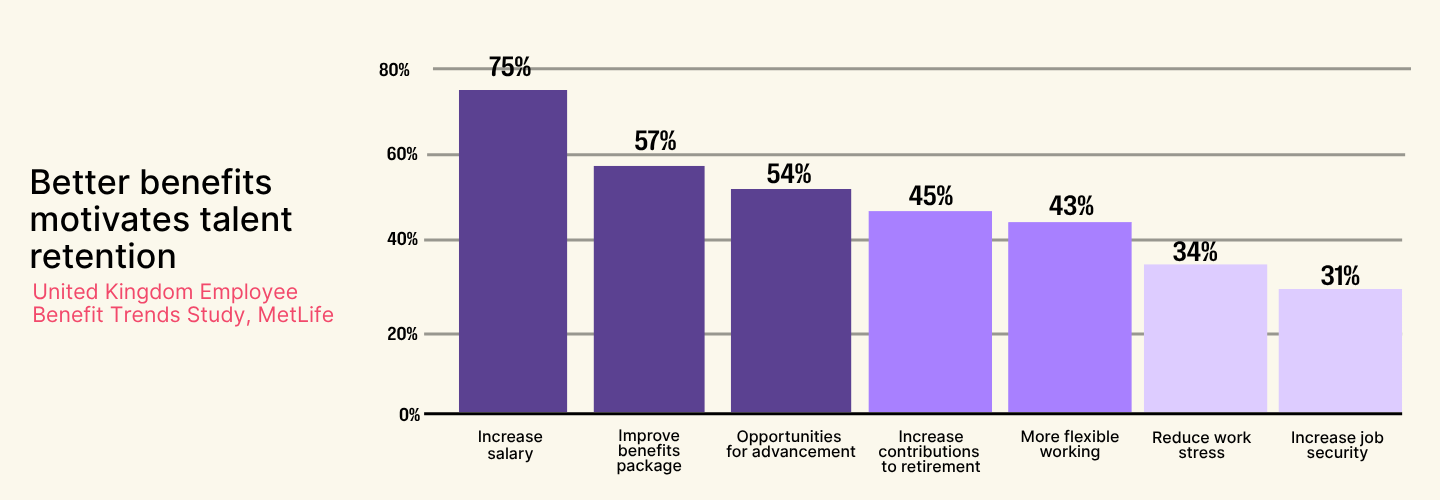
The link between benefits and employer reputation is especially important for small and medium businesses trying to attract talent. A well-designed benefits package can build a positive employer brand, help with hiring and keeping staff, boost engagement, and make the workplace happier. In one study, 75% of employees said they were more likely to stay because of the benefits offered.
The best employer brands do not treat benefits as just a checklist. They use them to show the company listens, adapts, and invests in its people. For UK companies, this can be a real advantage: a good benefits scheme can help attract new hires, keep current staff, and build a reputation as a great place to work.
Why do many benefits schemes fail?
Many employee benefits schemes fail because they are designed as a list of perks rather than a meaningful employee wellbeing strategy. A company may offer private healthcare, gym discounts, salary sacrifice options, an employee assistance programme or flexible working, but that does not automatically mean employees understand, value, or use them.
The real problem is often not the absence of benefits. It is the gap between what employers offer and what employees actually need. For example, only 27% of HR professionals feel confident that their benefits package is competitive, while nearly half of employees say their current benefits offering is not strong enough to attract top talent.
That gap shows why a benefits scheme can look strong on paper but still fail to support wellbeing, retention, or employer branding in practice.
Benefits fail when they are not relevant to employees’ real needs
A benefits scheme is unlikely to improve employee wellbeing if it is built around assumptions.
Employees have different needs depending on their age, income, life stage, health, caring responsibilities, working pattern, and location. A junior employee may value mindfulness tools, access to therapy, and career development. A parent may value flexible working, enhanced parental leave, and childcare support. An older employee may place more importance on pension contributions, healthcare, and phased retirement.
This is why a one-size-fits-all employee benefits package often underperforms. In fact, only 54% of employees use their benefits, suggesting that many schemes are either not relevant, not understood, or difficult to access. In this scenario, benefits are not valued; they are treated as costs rather than investments.
For UK companies, the solution is to design benefits around employee insight. Surveys, focus groups, usage data, and employee feedback can help HR teams understand what people actually need, rather than copying competitors or adding trendy perks that do not solve real problems.
Benefits fail when employees do not know what is available
Even a strong employee benefits scheme can fail if communication is weak. Employees cannot use benefits they do not know about, do not understand, or cannot remember when they need support.
This is especially common when benefits are only explained during onboarding or annual enrolment. A new starter may receive a long list of benefits in their first week, but that does not mean they will remember how to access counseling six months later, how salary sacrifice works when their financial situation changes, or what support is available when they start feeling burned out.
The communication gap is significant. Around 69% of workers want to learn about their benefits at least a few times throughout the year, but only 48% receive that level of communication. Another finding shows that only 34% of businesses have an engagement strategy in place for benefits communication.
Benefits communication should not be a one-off HR announcement. It should work like an internal marketing campaign, with regular reminders, simple explanations, employee stories, manager toolkits, onboarding materials, intranet content, payroll prompts, and personalised messages for different employee groups
Benefits fail when they are difficult to access
Access is another major reason employee benefits schemes fail. A benefit may be useful in theory, but if it is hard to find, hard to book, poorly timed, or limited to certain groups, uptake will remain low.
Low participation does not always mean employees do not care. It can mean the benefit is too rigid, poorly communicated, or incompatible with people’s schedules. For example, a mindfulness session may be offered during an important team meeting, a gym benefit may not work for remote employees, or healthy food options may only be available in the office. In these cases, the issue is not motivation. The issue is design.
Benefits fail when they ignore work-life balance and time
Many wellbeing benefits fail because employees lack the time or flexibility to use them. Offering a gym membership, therapy session, or a wellness app is less effective if the workplace culture still rewards long hours, back-to-back meetings, and constant availability.
This is a critical point for UK employers. Our research has found that 50% of employees say a lack of time prevents them from engaging more often with wellness spaces, while 27% cite low energy or motivation, and 23% point to practical issues such as cost, scheduling conflicts, or limited opening hours.
That means companies need to think beyond the benefit itself. A successful employee benefits scheme should be supported by working practices that make wellbeing realistic. Flexible working, protected lunch breaks, meeting-free time, realistic workloads, and manager support can make the difference between a benefit employees appreciate and a benefit they actually use.
Benefits fail when they are too generic or surface-level
A benefits scheme can also fail when it focuses on surface-level perks instead of meaningful support. Free snacks, one-off wellbeing days, or occasional discounts may be appreciated, but they are unlikely to solve deeper issues such as burnout, financial stress, poor mental health, or lack of work-life balance.
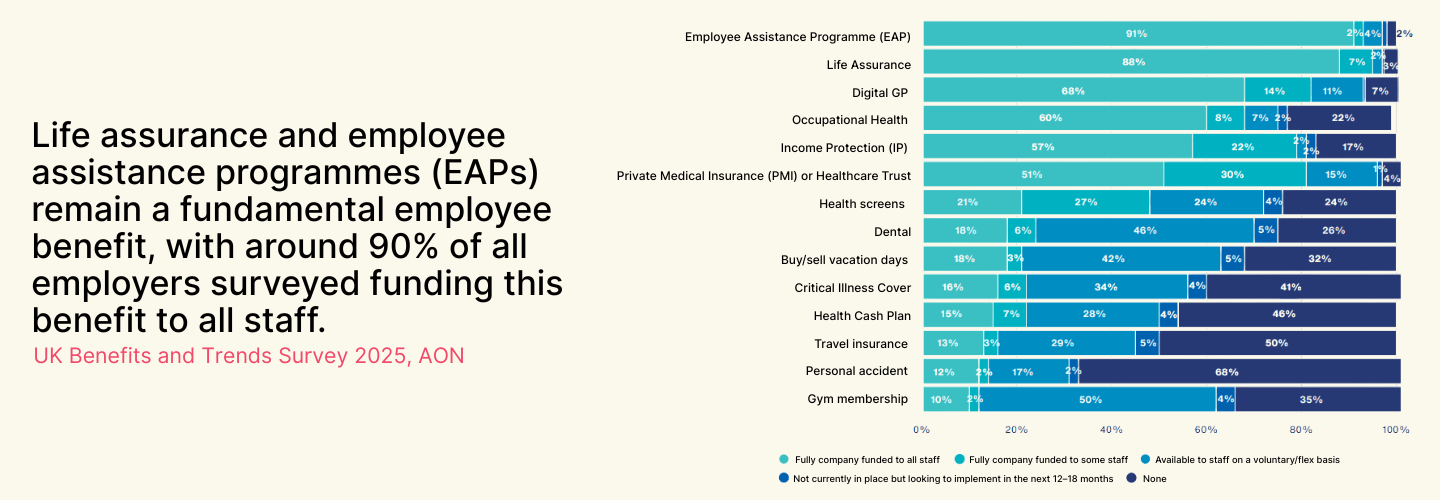
While 53% of CEOs say their organisation offers gym membership subsidies or discounts, only 29% offer virtual fitness, despite the rise of hybrid and remote work. In mental wellbeing, 51% offer therapy or counselling and 45% offer paid mental health days, but only 25% offer burnout prevention initiatives. In financial wellbeing, 47% offer retirement savings plans, but only 31% offer budgeting tools or apps, and only 29% provide financial education workshops or webinars.
This shows a common failure point: many benefits schemes are strong in traditional areas but weaker in prevention, personalisation and day-to-day support. Employees do not only need long-term benefits. They also need practical help with daily stress, short-term financial pressure, movement, sleep, nutrition, and mental resilience.

Get started on your company's wellbeing journey
Work-life wellness with Wellhub benefits everyone - healthier people, happier companies, proven savings.
Benefits fail when companies do not review them regularly
Employee needs change. A benefits scheme that worked three years ago may no longer reflect how people live, work, and manage their wellbeing today. Hybrid working, financial pressure, burnout, family responsibilities, and rising expectations around mental health have all changed what employees expect from employers.
Despite this, many benefits schemes are not updated often enough. Our research found that 37% of employees say their company adjusts its benefit programmes at least once a year, while 31% say no updates are made, and 32% are unsure about it. That means nearly two-thirds of the workforce may be left behind or left unclear about how their employer is adapting its support.
A strong benefits scheme should be reviewed at least annually, using employee feedback, participation data, wellbeing survey results, absence trends, retention data, and recruitment feedback. Without regular review, benefits can quickly become outdated, underused, and disconnected from employee expectations.
Benefits fail when wellbeing is not part of company culture
Employee benefits cannot carry the full weight of wellbeing on their own. If the culture does not support employees to use their benefits, the scheme will struggle.
For example, an organisation may offer flexible working, but employees may feel guilty using it. It may provide mental health support, but managers may avoid talking about stress. It may offer annual leave purchase, but workload expectations may make time off difficult. In these cases, the benefits exist, but the culture prevents people from using them.
This matters because only 44% of employees agree that wellness is truly ingrained in their company culture. Among employees who describe themselves as extremely happy at work, 77% say wellness is embedded in the culture. Among unhappy employees, only 12% say the same.
Leadership is a major part of this. For example, 43% of CEOs say leadership support is a key factor in long-term programme success, while 41% want more open conversations around mental health. There’s also a major perception gap: 92% of executives think employees believe leadership prioritises wellbeing, but only 68% of employees agree. Only 50% of workers think their C-suite genuinely cares about their wellbeing.
This is where many benefits schemes fail. They exist on paper, but employees do not believe leadership genuinely supports them. To close that gap, leaders and managers need to normalise wellbeing, talk openly about available support, use benefits themselves, and give employees permission to prioritise their health without stigma.
The takeaway: benefits fail when they are treated as an add-on
Many employee benefits schemes fail because they are not aligned with how people actually work and live. They are too generic, poorly communicated, difficult to access, weakly measured, or disconnected from company culture.
A successful employee benefits scheme should be relevant, inclusive, flexible, easy to use, and regularly reviewed. It should be backed by employee feedback, leadership support, clear communication, and measurable outcomes. Most importantly, it should be treated as a core part of the company’s employee wellbeing strategy.
6 steps to design an employee benefits scheme around wellbeing
Designing an employee benefits scheme around wellbeing means creating a benefits package that supports employees’ health, security, and quality of life, not just their role at work. For UK companies, this should combine statutory benefits, such as workplace pensions, paid leave, and statutory sick pay, with wellbeing-focused support that improves physical health, mental health, financial security, work-life balance, and social connection.
As mentioned before, the aim is not to offer the longest possible list of perks. The aim is to create a scheme that is useful, inclusive, easy to understand, and aligned with how employees actually live and work.
This is now a business priority. Globally, 86% of employees consider workplace wellbeing as important as salary, and 85% would consider leaving a company that does not focus on employee wellbeing.
Step 1: Define your wellbeing framework
Start by deciding what “wellbeing” means for your organisation. This gives the benefits scheme a clear structure and helps avoid a scattered list of disconnected perks.
A practical framework should cover:
- Physical wellbeing: healthcare, fitness, nutrition, sleep, and recovery.
- Mental wellbeing: counselling, therapy, stress management, and burnout prevention.
- Financial wellbeing: pensions, salary sacrifice, savings support, financial education, and employee discounts.
- Social wellbeing: belonging, recognition, community, and team connection.
- Work-life balance: flexibility, leave, caring responsibilities and sustainable workloads.
This holistic approach matters because 95% of employees agree that physical, mental, emotional, and social wellbeing are connected.
Step 2: Build a balanced benefits mix
Once the framework is clear, map benefits to each wellbeing pillar. This helps you build a balanced employee benefits scheme instead of over-investing in one area and leaving gaps elsewhere.
A strong scheme could include:
- private medical insurance, virtual GP access and health cash plans;
- employee assistance programs, counselling and mental health days;
- workplace pensions, salary sacrifice, budgeting tools and financial education;
- gym access, fitness platforms, nutrition support and sleep tools;
- flexible working, enhanced leave, carers’ support and family-friendly policies;
- recognition schemes, volunteering, employee communities and team wellbeing challenges.
To make the package easier to manage, group benefits into three categories:
Core benefits: benefits every employee receives, such as workplace pensions, paid holiday and company-wide wellbeing support.
Flexible benefits: benefits employees can choose from, such as extra leave, healthcare upgrades, gym access or childcare support.
Voluntary benefits: optional benefits employees can access, often at a discount, such as retail discounts, travel loans or cycle-to-work schemes.
This structure helps employees understand what is included, what they can choose and how the scheme supports their wellbeing.
Step 3: Design around life stages and working patterns
A wellbeing-led benefits scheme should reflect the fact that employees have different needs at different moments in their lives.
For example:
- New starters may need financial education, onboarding support, and social connection.
- Parents may value enhanced parental leave, childcare support, and flexible working.
- Carers may need carers’ leave, flexibility, and mental health support.
- Remote employees may value virtual GP access, digital wellbeing tools, and ways to build connection.
- Frontline employees may need benefits that do not rely on desk-based access or office-only activities.
- Older employees may value pension guidance, healthcare, menopause support or phased retirement.
This is where personalisation matters. Employees are more likely to value and use benefits when the package feels relevant to their life stage, working pattern, health needs and personal priorities.
Step 4: Connect benefits to daily wellbeing habits
Benefits should help employees build healthier routines, not sit separately from everyday work. A strong employee benefits scheme supports the small habits that improve wellbeing over time.
This could include:
- wellbeing platforms for fitness, mindfulness, or therapy support;
- walking meetings or active breaks;
- nutrition guidance or healthy eating support;
- sleep tools and stress-management resources;
- team challenges, volunteering, or community activities;
- flexible schedules that make time for exercise, therapy, or caring responsibilities.
This approach reflects the changing nature of employee expectations. Globally, 64% of employees say their approach to wellbeing has become more intentional over the past five years, and 82% say they have made positive lifestyle changes in the past year to support their wellbeing.
Step 5: Make the scheme easy to access and activate
A benefits scheme should be simple for employees to understand and use. Technology can help by bringing everything into a single digital hub, especially for hybrid, remote, multi-site, or growing companies.
A strong benefits experience should allow employees to:
- see all available benefits in one place;
- understand eligibility;
- choose flexible benefits;
- access wellbeing tools;
- receive personalised recommendations;
- find support without needing to ask HR every time.
The launch also matters. Employees should know what benefits are available, why they matter, and how to use them. A clear activation plan could include manager briefings, employee guides, FAQs, intranet content, short videos, wellbeing campaigns, and reminders across the year.
Technology can also reduce HR admin. This is important because 21% of CEOs worry that wellness programs are too difficult for HR to manage, while digital tools can support enrolment, engagement tracking, and reporting.
Step 6: Measure, review and improve the scheme
A wellbeing-focused employee benefits scheme should evolve with the workforce. Before launch, define what success looks like for both employees and the business.
Useful goals include:
- improving employee wellbeing scores;
- increasing benefits usage;
- reducing absence;
- improving retention;
- supporting recruitment;
- improving engagement;
- reducing burnout risk;
- strengthening employer branding.
According to our data, 32% of CEOs prioritise employee feedback, 21% track participation rates and 19% focus on productivity improvements when measuring wellness programme success.
A simple review cycle could include monthly usage checks, quarterly employee pulse surveys, and a full annual benefits review.
Employee wellbeing should be the north star of your employee benefits scheme
Employee benefits should do more than help you attract talent. The right scheme should support employee wellbeing, strengthen engagement, and help your people thrive both in and outside of work.
The most effective benefits schemes are built around real employee needs. They support physical health, mental wellbeing, financial security and social connection, while giving employees the flexibility to choose what works for their life stage, working pattern and personal priorities. They are also easy to understand, simple to access and regularly reviewed, so the benefits remain relevant as employee expectations change.
For HR leaders, the key is to treat employee benefits as part of a wider wellbeing strategy, not just a reward package. When benefits are aligned with company culture, communicated clearly and measured properly, they can help employees feel valued, supported and able to do their best work.
Wellhub can help UK companies bring this approach to life. Through a single corporate wellbeing platform, Wellhub gives employees access to a wide range of fitness, mindfulness, therapy, nutrition and wellbeing options, helping organisations support healthier routines in a flexible and inclusive way. Get your free quote
Category
Share

The Wellhub Editorial Team empowers HR leaders to support worker wellbeing. Our original research, trend analyses, and helpful how-tos provide the tools they need to improve workforce wellness in today's fast-shifting professional landscape.
You May Also Like

The Ultimate Guide to Small UK Business Wellness Programmes in 2026
Boost retention, cut costs, and build resilience with simple wellness strategies designed for small businesses working with lean budgets.

See how to reduce employee health insurance costs | Qualidade de vida, gestão de pessoas e conteúdo para RH
It is important to offer employees a good health insurance plan, although it may not be mandatory in many sectors. Such benefits bring peace of mind and allow employees to focus on the job, not to mention the motivation factor which attracts and retains talents. Moreover, health is wealth. The wise saying makes sense, particularly […]

6 Ways Corporate Team Building Exercises Can Improve Employee Productivity | Qualidade de vida, gestão de pessoas e conteúdo para RH
Why should companies invest in team building? It is like asking why people should invest in their staff; it’s about increasing engagement from staff, in the pursuit of increased productivity which will ultimately provide the sought after, return on investment. Happy & engaged staff make for a better, more productive workplace. The benefits of team […]