The Most Effective Employee Wellness Challenges for January
Last Updated Feb 2, 2026

Key Takeaways
- January wellness challenges work because they turn motivation into action. Employees start the year energized, but without structure, most goals fade quickly. Challenges provide clear steps, accountability, and momentum.
- January is the highest-impact, lowest-effort time for HR to launch challenges. Fresh budgets and natural motivation make engagement easier to spark. Well-timed initiatives drive early wellbeing adoption and set the tone for Q1.
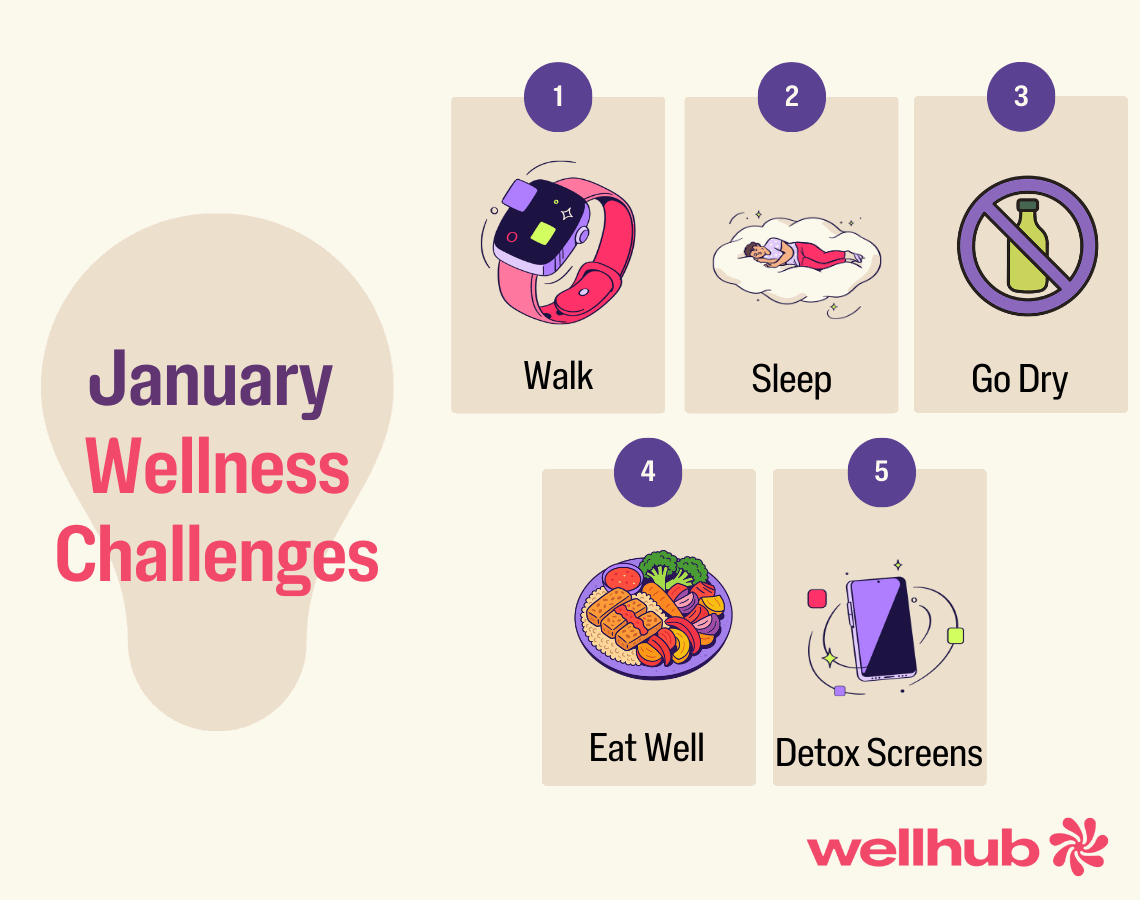
- The most effective challenges focus on simple, sustainable daily behaviors. Steps, sleep, nutrition, mindful drinking, and digital boundaries are inclusive and flexible. These challenges emphasize consistency over perfection. When wellness fits real workdays, participation and completion rates stay higher.
- Lightweight tracking keeps challenges motivating, not overwhelming. Familiar tools, minimal reminders, and visible progress help employees stay engaged. Leaderboards and small shoutouts reinforce community and momentum. When tracking celebrates effort, it encourages participation instead of creating pressure.
- Incentives drive results when they reward consistency, not just outcomes. Recognizing participation and improvement makes challenges more inclusive. Wellness-aligned rewards and public recognition reinforce habit-building.
Your people come back in January with big goals and even bigger expectations. But without the right support, those resolutions don’t last past the second week.
It’s not a lack of motivation — it’s a lack of structure. They need a clear path forward. One that feels doable, rewarding, and connected to your company’s culture.
That’s where January wellness challenges shine. They channel all that New Year energy into lasting behavior change!
Uncover the benefits of starting strong with five January-ready challenges your people will actually finish.
Why January Is Ideal for Launching Wellness Challenges
Let’s be real: January is the moment for HR teams to make a big impact with very little lift.
It’s a fresh quarter. A fresh budget. A fresh chance to support your people in turning intentions into action. And right now, your employees are already setting personal goals — they’re just looking for the structure to stick with them. That’s where you come in.
Wellness challenges give those goals a plan. And plans are what turn resolutions into real behavior change.
Launching now means you can:
- Engage your team while motivation is high
- Drive adoption of your Wellhub plan early in the year
- Build momentum that lasts through Q1 and beyond
And here’s the secret sauce: You don’t need a full overhaul. Just a few well-timed challenges — step goals, sleep resets, digital detoxes — and your people are off and running. With the tools and partners already included in a Wellhub plan, it’s easy to meet everyone where they are and help them build healthier habits on their terms.
This is your January jumpstart. Your team is ready — and with the right wellness plan in place, they’re more likely to stay ready all year.
Top 5 Goal-Oriented January Challenges
Turn resolution energy into real behavior change.
This takes more than intention. It needs infrastructure. When you give employees a clear, engaging way to activate their New Year’s goals, you’re doing more than offering a wellness perk. You’re embedding wellbeing into the fabric of your culture.
Each of the five challenges below is designed to target a key area of employee health (physical, emotional, nutritional, and digital), while also promoting community, productivity, and resilience. (And yes — each one can be powered by Wellhub partners!
- Step into the New Year
Focus: Daily movement, cardiovascular health, and team connection
Why it works: Step challenges are accessible, inclusive, and easy to gamify. They get people out of their chairs (and Zoom boxes) and into motion — even during dark winter days.
How to launch it:
- Create teams by department or office location to foster healthy competition.
- Set a daily step goal (e.g., 7,500 to 10,000 steps/day) tracked through Strava, or MyFitnessPal, etc.
- Use leaderboards and weekly shoutouts to highlight top steppers, most improved, and “best team names.”
- Offer daily “movement prompts” to keep it fresh: walk-and-talk meetings, morning stretches, or themed walking days.
Encourage remote workers to share photos of their walking routes or lunch break hikes in Slack. The community vibe really fuels participation.
Highlight that employees can use walking desks, treadmill workouts, or outdoor routes — whatever fits their day.
- Sleep Reset Challenge
Focus: Energy management, stress recovery, and burnout prevention
Why it works: Sleep isn’t a luxury — it’s a business performance driver. Poor sleep leads to presenteeism, irritability, and lower cognitive function. This challenge helps employees reset their rhythms after the chaos of Q4 and holiday travel.
How to launch it:
- Kick off with an all-hands workshop: “The Science of Sleep and Productivity”
- Invite employees to track their sleep patterns using Sleep Cycle or Bettersleep
- Set challenge tiers: Track sleep for 7 days, improve sleep quality score, or build a “wind-down” routine
- Encourage participants to try one new sleep hygiene habit each week: digital curfews, bedtime meditation, magnesium tea, or screen-free nights
Measurement tip: Instead of just tracking hours, focus on consistency and routine-building — both of which correlate strongly with better sleep outcomes.
- Dry January, Rewarded
Focus: Mindful consumption, mental clarity, and inclusive wellness
Why it works: Alcohol reduction is one of the most common New Year goals, but going it alone can be hard. This challenge makes it social, celebratory, and reward-driven — without pressure or judgment.
How to launch it:
- Position the challenge as optional and inclusive: “Whether you’re all in or just cutting back, you’re welcome here.”
- Use Me+ to track health habits and Headspace to offer emotional support and mindfulness tools
- Create a badge system for milestones: 7 days dry, 14 days, 30 days, plus a “Cheers Champion” for participation and encouragement
- Share mocktail recipes and host a virtual or in-office “Dry January Social” at the halfway mark
Manager toolkit tip: Equip team leads with talking points for encouraging healthy habits without moralizing alcohol use.
- New Year Nutrition Challenge
Focus: Eating habits, energy levels, and digestive health
Why it works: Nutrition is one of the top areas employees want help with — especially after an indulgent holiday season. This challenge goes beyond dieting and focuses on fueling better days.
How to launch it:
- Encourage employees to log meals and hydration in Nutrium or BodyFast
- Offer weekly goals (add one plant-based meal per day, drink 64 oz of water, prep lunch three times/week)
- Organize “Lunch and Learn” sessions with nutrition experts or wellness partners
- Spotlight employee-submitted recipes in your internal newsletter or Slack channels
Scalability tip: Use templated meal plans or grocery lists to reduce planning fatigue.
- Digital Detox Challenge
Focus: Attention restoration, work-life boundaries, and mental clarity
Why it works: After a year of constant context-switching, employees are craving mental stillness. Digital detoxes are a low-effort, high-reward way to help people reset — especially in remote and hybrid environments.
How to launch it:
- Choose a challenge format: no phone after 8PM, screen-free Sunday mornings, or “No Meeting Wednesday” for deep work
- Encourage the use of Fabulous to build consistent wellness routines throughout the day
- Add a reflective element: How did going offline affect your mood? Sleep? Stress?
- Offer weekly “quiet hour” blocks at work — no pings, no calls, just thinking time
Behavioral science tip: Pair detox time with a positive replacement habit (journaling, reading, stretching) to boost stickiness.
Want employees to actually finish your January challenges? Don’t just give them a tracker — give them a toolkit. Every one of these challenges becomes stickier with the right mix of apps, accountability, and incentives — which we’ll dive into next.
Tools to Track Progress and Drive Participation in Wellness Challenges
Because what gets measured gets reinforced.
Launching a wellness challenge is the first step. The next — and arguably more important — step is making sure your employees stay engaged. And that means tracking.
It’s critical that tracking feels like motivation, not micromanagement. It should celebrate progress, show momentum, and give people a sense of accomplishment without friction or fatigue.
Here’s how to make it happen:
- Choose the Right Tracking Tools — and Make Them Seamless
Use tools that are already part of your employees' daily routines. This keeps adoption high and admin effort low.
Challenge Type | Tracking Tools to Recommend |
| Steps | Strava, MyFitnessPal, Fastic |
| Sleep | Sleep Cycle, Bettersleep |
| Dry January | Fizzup (habit tracker), Headspace (mood logs) |
| Nutrition | Nutrium, BodyFast |
| Digital Detox | Fabulous |
HR Tip: Consider embedding links or QR codes directly into internal communications that let employees download the app, join the challenge, or sync a device in one tap. And, if you offer Wellhub, remind them that all of these services are included in their subscription!
- Create a Public (or Semi-Public) Leaderboard
People respond to progress — especially when it’s visible and part of a shared experience.
Set up a weekly leaderboard in Slack, Teams, or your HRIS dashboard. Categories could include:
- Most steps logged
- Most consistent check-ins
- Best team participation rate
- Most creative challenge photo or tip
- Automate Reminders and Check-Ins
Consistency builds habits — and automated nudges help keep wellness top-of-mind without adding to your workload.
How to do it:
- Calendar block: Add a weekly “challenge check-in” to employee calendars
- Slack integration: Use bots or pinned messages to prompt daily log-ins
- Email: Send a short, skimmable recap every Friday with participation stats, highlights, and small wins
Pro Tip: Include visual progress bars or short messages like “Eighty-four percent of your team logged their steps this week — let’s hit one hundred percent by Monday.”
- Use Forms and Feedback Loops
Data doesn’t always mean dashboards. Qualitative feedback can be just as powerful for understanding engagement and reinforcing what’s working.
Ideas:
- Weekly micro-surveys with a single question about the challenge experience
- Reaction polls on Slack to take a quick pulse on mood and motivation
- Open-ended prompts like “What was your favorite win this week?” to capture authentic moments
Sharing this feedback with leadership helps demonstrate the connection between wellbeing and employee sentiment — and supports the case for continued investment.
- Tie Progress to Micro-Rewards
Not every reward needs to be PTO or gift cards. Micro-rewards tied to consistent effort and team engagement help drive momentum and reduce drop-off.
Try:
- Weekly raffles for anyone who logs their participation
- Digital shoutouts like “Wellness Champion of the Week”
- Team-level incentives such as lunch delivery for the department with the highest participation rate
The goal isn’t just to track challenge completion: It’s to make employees feel successful along the way. That’s how you build real behavior change that lasts well beyond January.
Best Incentives for January Wellness Challenges
Because behavior change needs more than a calendar. It needs motivation.
When it comes to workplace wellness challenges, rewards are not just the cherry on top — they’re a core part of the strategy. But not all incentives are created equal.
The goal isn’t to dangle a prize at the finish line. It’s to reward progress, recognize consistency, and make employees feel like their effort matters. That’s how you turn one good month into sustainable change.
Here’s how to design rewards that actually work — and feel aligned with your culture.
- Reward the Habit, Not Just the Outcome
Yes, it’s exciting to celebrate the employee who crushed the most steps or tracked their sleep perfectly. But challenges become more inclusive when you recognize consistency and effort, not just performance.
Try this:
- Celebrate “most improved” or “most consistent”
- Offer weekly raffles for logging participation, not just results
- Reward departments or teams for percentage-based participation — not just top scorers
When employees feel like they can win by showing up, they’re more likely to keep going.
- Offer Rewards That Support the Goal
The best wellness incentives support wellness goals. Instead of defaulting to gift cards or company swag, offer prizes that help employees continue their wellness journey.
Incentive ideas aligned with challenge themes:
Challenge Type | Reward Ideas |
| Step Challenge | New walking shoes, standing desk converter, wearable tracker |
| Sleep Reset | Weighted blanket, sunrise alarm, digital wellness app credit |
| Dry January | Mocktail kits, mindfulness class, bonus Headspace sessions |
| Nutrition Challenge | Meal prep service gift card, healthy snack box subscription |
| Digital Detox | Bookstore gift card, guided journal, blue light glasses |
- Offer Time-Based Rewards
Sometimes, time is the best motivator.
If you want to drive high challenge completion, consider offering time-based incentives that show respect for your employees’ work-life balance.
Options include:
- Early-release Friday for teams that meet their goals
- Bonus wellness hour to use any way they choose
- One floating day off for challenge participation over a set threshold
These rewards reinforce that your organization doesn’t just talk about wellness — it creates space for it.
- Use Recognition as a Retention Tool
Not every reward needs a dollar sign. Recognition can be just as motivating — and it’s a powerful driver of employee satisfaction and retention.
Try incorporating:
- Shoutouts in company-wide emails or newsletters
- Recognition badges in internal HRIS or employee experience platforms
- A virtual “Wall of Wellness” featuring employee stories or progress highlights
- Manager-delivered thank-you notes or wellness check-ins
When recognition is personalized, public, and tied to a shared goal, it reinforces both community and accountability.
January Wellness Challenges Build Year-Round Engagement
Employees step into January with motivation but often lack the support to follow through on their goals.
Launching wellness challenges through a wellbeing program gives employees the plan they need to make progress.
Wellhub makes it easy to run these initiatives with top-tier partners and integrated tracking tools — and it works. Our members are more than twice as likely to rate their sleep, nutrition, and overall wellness as good or excellent compared to non-members.
Speak with a Wellhub team member to turn January’s momentum into lasting employee engagement!

Company healthcare costs drop by up to 35% with Wellhub*
See how we can help you reduce your healthcare spending.
[*] Based on proprietary research comparing healthcare costs of active Wellhub users to non-users.
Category
Share

The Wellhub Editorial Team empowers HR leaders to support worker wellbeing. Our original research, trend analyses, and helpful how-tos provide the tools they need to improve workforce wellness in today's fast-shifting professional landscape.
Subscribe
Our weekly newsletter is your source of education and inspiration to help you create a corporate wellness program that actually matters.
Subscribe
Our weekly newsletter is your source of education and inspiration to help you create a corporate wellness program that actually matters.
You May Also Like

FSA vs. HSA Strategy for HR Leaders | Wellhub
Compare FSA vs HSA rules, tax advantages, eligibility, and rollover differences to help employees choose the right account and avoid costly compliance issues.

Employee Wellness Programs: Key Components for Success | Wellhub
Transform your workplace wellness strategy by integrating physical, mental, financial, and social wellbeing into a comprehensive wellness program that works

Benefits Strategy Roadmap: Pull and Retain Top Talent | Wellhub
Support wellbeing, reduce turnover, and maximize ROI with a benefits strategy built for today’s workforce—not yesterday’s spreadsheet.