How to Evaluate Fitness Network Platforms: A 7-Step HR Decision-Making Guide
Last Updated Dec 8, 2025

Key Takeaways
- Choosing the right fitness network starts with defining clear, measurable goals. When HR teams anchor the search to outcomes like engagement, retention, or burnout reduction, it becomes easier to evaluate vendors objectively. This clarity keeps the selection process focused on strategic impact rather than feature overload.
- Network breadth and accessibility are core drivers of long-term participation. Employees are more likely to stay engaged when they can choose from gyms, classes, outdoor activities, apps, and community-based experiences. This variety supports different lifestyles and helps more people build sustainable wellbeing habits.
- Ease of use determines whether a fitness benefit actually gets adopted. Platforms with intuitive mobile experiences, personalized recommendations, social features, and simple onboarding make it far more likely that employees will return after their first login. These frictionless experiences help turn a new benefit into a cultural staple.
- Whole-person wellbeing support is essential for delivering real workforce outcomes. The most effective platforms connect physical activity with mental health, stress management, nutrition, sleep, and social connection. This holistic model is what drives measurable improvements in engagement, productivity, and burnout reduction.
- Strong integrations, reporting, and pricing flexibility turn wellbeing into a strategic business lever. Clean data, clear insights, and adaptable pricing structures help HR teams demonstrate ROI and justify continued investment. With the right platform, wellbeing becomes a performance conversation — not just another line item in benefits.
You’re finalizing your benefits strategy for the year, and you can feel that employee wellbeing needs to play a bigger role. Your workforce has been asking for more support, and they’re not shy about it — 86% of employees say their wellbeing at work is just as important as their salary.
A fitness network platform seems like the perfect addition. But as you scroll through features, pricing models, and endless lists of partners, a simple question emerges: How do you actually choose the right one?
That’s where this guide comes in. You’ll walk step-by-step through evaluating fitness network platforms with clarity and confidence. And by the end, you’ll be able to compare vendors using a straightforward decision matrix you can share with your leadership team.
Step 1: Define What Success Looks Like for Your Organization
Before diving into vendor comparisons, take a breath and define your destination. When you know what you’re aiming for, it becomes much easier to identify the platform that will take you there.
Start by clarifying your top priorities. Are you hoping to boost engagement? Reduce burnout? Strengthen retention? These questions matter, especially since 85% of employees say they would consider leaving a company that doesn’t prioritize wellbeing .
As HR leaders, you’re responsible for connecting people strategies to business outcomes. So give success a shape. Write down three measurable goals you want a fitness network to influence. These goals become your North Star throughout the evaluation process.
Step 2: Assess Network Breadth and Accessibility
Every employee's wellbeing journey looks different. One person thrives in a boxing class; another finds balance through yoga; someone else just wants a peaceful walk outside. The right fitness network should support all of them.
As you compare platforms, look at the range of options they offer. Do employees get access to gyms? Studio classes? Outdoor activities? Wellness apps? Recreation spaces?
This variety matters because when employees have choices, they participate more — and participation is everything. Social connection helps too: 53% of employees say they’re more likely to engage in healthy behaviors with others, and community-based options make that easier .
A truly accessible network respects the diverse lifestyles, schedules, and comfort levels of your workforce. Platforms that rely on a single modality, or offer limited partner options, make it harder for employees to stay engaged long-term.
Step 3: Compare Ease of Use and Adoption Potential
Picture this: you roll out a new platform with great fanfare… and employees log in exactly once.
Ease of use is the difference between a benefit that sits on the shelf and a benefit that transforms your culture. You want a platform that feels intuitive, encourages exploration, and makes it easy for people to build consistent habits.
Look for:
- A clean, simple mobile experience
- Personalized recommendations
- Gamification that helps employees stay motivated
- Ready-to-run team challenges
- Low-lift onboarding for HR
These small features carry big weight: 41% of employees say gamified features keep them motivated, and 62% say social support is critical to reaching their wellness goals . The easier you make it to get started, the faster participation will grow.
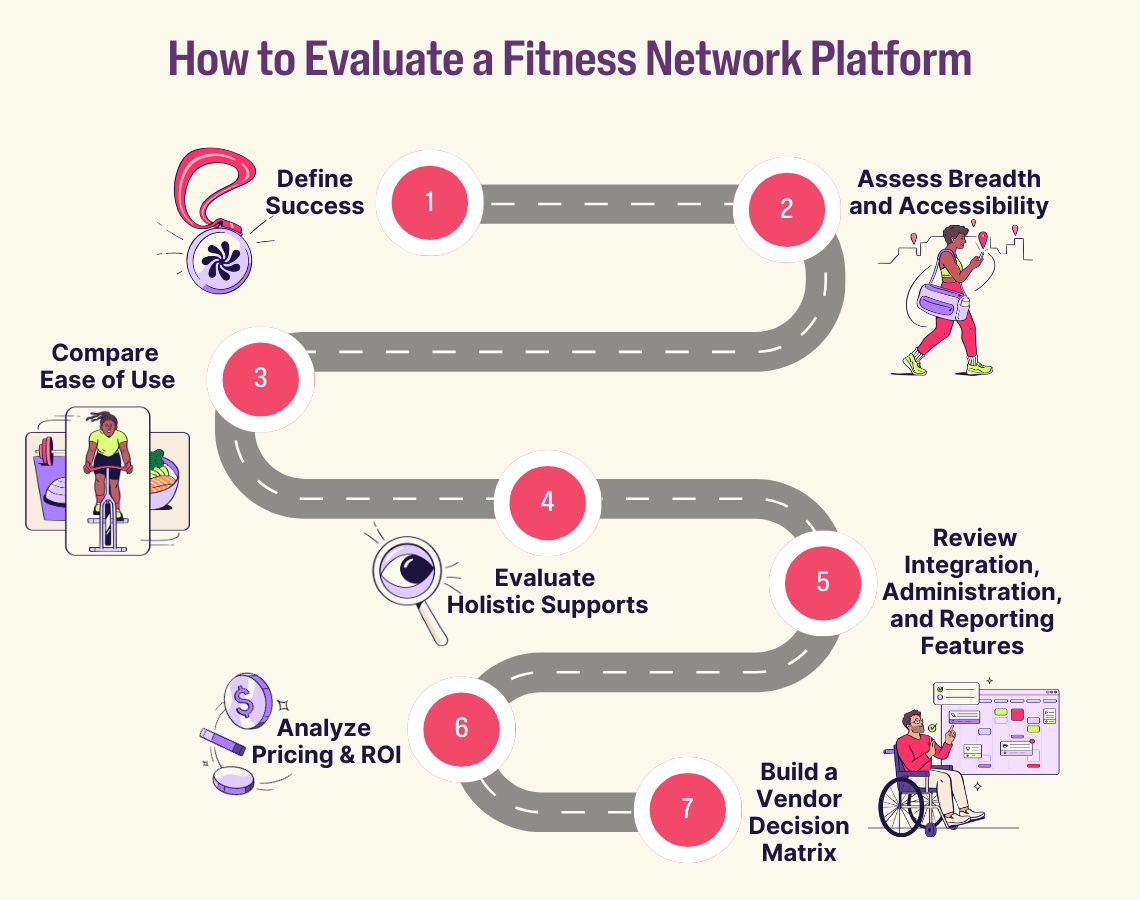
Step 4: Evaluate Whole-Person Wellbeing Support
Modern wellbeing goes far beyond physical fitness. Employees today see their health as a connected ecosystem — and they’re right. Ninety-five percent agree that physical, mental, emotional, and social wellbeing are interconnected .
If a fitness network only addresses one aspect of wellbeing, it simply won’t move the needle.
A strong platform should support:
- Movement and exercise
- Mental wellbeing tools
- Mindfulness and stress relief
- Nutrition resources
- Sleep support
- Social and community-building experiences
This is where evaluating breadth becomes essential. Whole-person wellbeing is what drives outcomes in burnout reduction, engagement, productivity, and retention. Anything less risks being an “extra perk” instead of a strategic lever.
Step 5: Review Integration, Administration, and Reporting Features
You’re busy. Your team is busy. Your benefits stack is already complex. The right fitness network should lighten your workload — not add to it.
As you compare platforms, examine:
- Technical integrations
- Enrollment and eligibility management
- Data privacy and security
- Reporting dashboards
- Insight frequency and transparency
You’re not just looking for data — you’re looking for clarity. And that’s something CEOs increasingly expect. In fact, 58% of CEOs who receive wellness impact updates monthly increased program funding last year .
A strong reporting tool helps you demonstrate HR’s impact on productivity, retention, and cultural health. It turns wellbeing into a business conversation instead of a benefits footnote.
Step 6: Analyze Pricing Models and ROI Potential
Fitness network pricing can vary wildly, which makes this step especially important. You want flexible options that align with your headcount, budget cycles, and employee usage patterns.
As you evaluate platforms, capture:
- Pricing structure
- Flexibility for growth or reorganization
- Engagement levels needed to see ROI
- Claimed outcome metrics
Wellbeing is a proven business strategy. Eighty-two percent of CEOs report a positive ROI from their wellness programs, and about one in three see returns of 100% or more.
Choosing a platform with strong engagement, broad accessibility, and whole-person support dramatically increases your return. It also makes it easier to justify program expansion and budget protection down the line.
Step 7: Build Your Vendor Decision Matrix
Now comes the fun part — turning all your research into a clear, objective comparison.
Here’s a simple matrix your team can copy into a spreadsheet to score each platform:When you evaluate platforms through the lens of your organizational goals, the right choice becomes clear. You’re no longer comparing features — you’re assessing strategic alignment.
Criteria | Wellhub | Vendor B | Vendor C |
| Network breadth (gyms + studios + apps + recreation) | Yes | ||
| Digital + in-person flexibility | Yes | ||
| Ease of use and adoption | Yes | ||
| Whole-person wellbeing support | Yes | ||
| Reporting + insights | Yes | ||
| Administrator experience | Yes | ||
| Pricing flexibility | Yes | ||
| Cultural engagement features | Yes | ||
| National & international reach | Yes |
A Fitness Network That Just Works
You’ve walked through the elements that matter most when choosing a fitness network platform. And you’ve seen how each factor contributes to the wellbeing of your workforce. When employees feel supported, they thrive.
And when they thrive, so does your business, because wellness is about performance: 89% of employees say they perform better at work when they prioritize their wellbeing .
A strong wellbeing program can help your people navigate stress, stay active, and build healthy routines that last. It also supports your broader HR goals around retention, engagement, and overall workforce resilience.
Wellhub brings all these elements together in a single, comprehensive platform. Our network spans thousands of in-person and digital partners, making wellbeing flexible, accessible, and genuinely engaging for every employee.
Speak with a Wellhub wellbeing specialist today to explore how we can help your organization thrive!

Company healthcare costs drop by up to 35% with Wellhub*
See how we can help you reduce your healthcare spending.
[*] Based on proprietary research comparing healthcare costs of active Wellhub users to non-users.
Category
Share

The Wellhub Editorial Team empowers HR leaders to support worker wellbeing. Our original research, trend analyses, and helpful how-tos provide the tools they need to improve workforce wellness in today's fast-shifting professional landscape.
Subscribe
Our weekly newsletter is your source of education and inspiration to help you create a corporate wellness program that actually matters.
Subscribe
Our weekly newsletter is your source of education and inspiration to help you create a corporate wellness program that actually matters.
You May Also Like

FSA vs. HSA Strategy for HR Leaders | Wellhub
Compare FSA vs HSA rules, tax advantages, eligibility, and rollover differences to help employees choose the right account and avoid costly compliance issues.

Employee Wellness Programs: Key Components for Success | Wellhub
Transform your workplace wellness strategy by integrating physical, mental, financial, and social wellbeing into a comprehensive wellness program that works

Benefits Strategy Roadmap: Pull and Retain Top Talent | Wellhub
Support wellbeing, reduce turnover, and maximize ROI with a benefits strategy built for today’s workforce—not yesterday’s spreadsheet.