12-Month Employee Wellness Calendar to Drive Engagement Year-Round (24 Ideas)
Last Updated Dec 15, 2025

Key Takeaways
- January is the best window to turn motivation into lasting habits. Employees start the year highly motivated, but momentum fades quickly without structure. Short, time-bound challenges like 21-day step goals or two-week sleep resets lower the barrier to entry and help build early consistency without requiring high fitness levels.
- Wellness programs succeed when tracking is simple and goals are low-friction. App-based check-ins, leaderboards, and quick daily actions make participation easy to sustain. Light incentives such as raffles or team rewards encourage consistency, while friendly team competition increases visibility without creating pressure.
- Sleep and recovery directly support performance and retention. Seasonal fatigue and high-demand periods increase burnout risk, making sleep programming a core wellbeing lever. Tracking sleep, promoting consistent bedtimes, and encouraging wind-down routines improve focus, mood, emotional regulation, and long-term engagement.
- Blending physical activity with social and emotional support drives engagement. Themes that combine movement with connection—such as heart health plus social prompts or team-based challenges—create belonging for hybrid and remote teams and help prevent participation drop-off during high-stress periods.
- Measure wellbeing impact with participation data and before-and-after insights. Track signals like check-ins, challenge completion, and workshop attendance alongside self-reported changes in sleep, stress, and mood. These metrics help HR demonstrate impact, identify drop-offs, and connect wellbeing efforts to productivity, retention, and benefits utilization.
Wellbeing is no longer a nice-to-have . It’s a performance driver, a retention strategy, and a culture-builder rolled into one.
But keeping wellness programs fresh, inclusive, and effective all year long? That takes more than free fruit and yoga once a quarter.
You need ideas that actually inspire behavior change. Strategies that meet the moment — whether it’s sleep recovery in January, financial resets in August, or mental health momentum in May.
This wellness calendar packs 24 proven programming ideas you can activate month by month. Each one is designed to boost participation, drive results, and support your people in ways that matter.
Plan smarter. Support better. Make 2026 your most impactful year yet.
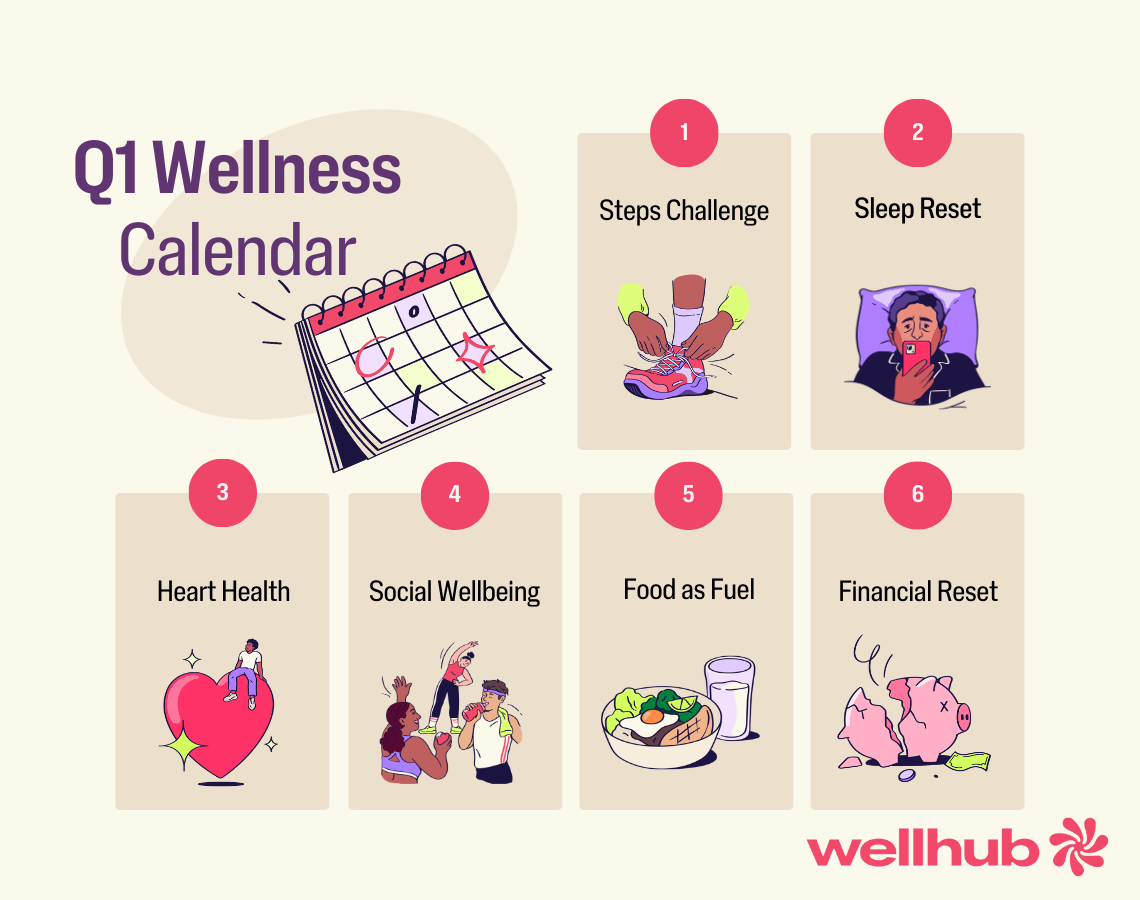
January: New Year Habits + Sleep Recovery
Theme: Activate Resolution Energy and Build Lasting Behavior Change
January is the most critical month for HR teams running a wellness program. Employees are naturally primed to set health goals, but research shows that more than 80% of resolutions fail by February. Your opportunity is to provide the structure and support that helps those goals stick.
Wellness Activity 1: Habit Formation Through Wellness
Programming Idea: “Step Into 2026” Challenge
- How it works: Create a 21-day step challenge encouraging employees to reach 7,000–10,000 steps per day.
- Why it works: Step-based challenges are accessible across all fitness levels and especially appealing to hybrid or remote employees.
- Tools to use: Strava for easy tracking.
- How to increase participation: Offer weekly raffles for consistent log-ins, and give departments the option to compete for a team lunch or early-release Friday.
Wellness Activity 2: Post-Holiday Sleep Reset
Programming Idea: “Better Sleep, Better Days” Campaign
- How it works: Run a two-week challenge encouraging employees to track their sleep, commit to a consistent bedtime, and implement one wind-down routine (no screens after 9 p.m., meditation, journaling, etc.).
- Why it works: Sleep is one of the most underutilized levers for performance. And in January, employees are often struggling with post-holiday exhaustion. Offering sleep-focused support not only improves mood and energy — it also supports cognitive function, emotional regulation, and retention.
- Tools to use: Sleep Cycle or Bettersleep for data tracking and personalized coaching.
- Supportive Add-ons: Launch the program with a 30-minute virtual “Sleep & Productivity” workshop and include quick-hit educational content in Slack or email.
What to measure:
- Daily participation rate (app check-ins)
- Self-reported sleep scores (baseline vs. post-challenge)
- Slack engagement in sleep-related prompts or activities
February: Heart Health + Emotional Connection
Theme: Build Cardiovascular Resilience and Social Support at Work
February is American Heart Month — a national call to action around heart health. It’s also when employees tend to feel a dip in motivation and connection, especially in colder climates. By combining physical wellness with emotional wellbeing, you can activate both body and mind in a way that feels supportive, not performative.
Wellness Activity 1: Heart-Healthy Movement Campaign
Programming Idea: “Move for Your Heart” Month-Long Activation
- How it works: Invite employees to complete 150 minutes of moderate activity per week — walking, cycling, dance classes, boxing — all count.
- Tools to use: Encourage app tracking through MyFitnessPal or Crunch Signature.
- Partner promotion: Highlight Wellhub’s partner studios like CycleBar, Rumble Boxing, and The Bar Method — all excellent for cardio-based engagement.
Bonus Layer: Create weekly “Try This, Not That” movement spotlights — e.g., “Try Zumba instead of the treadmill,” or “Boxing for better cardio health.” This keeps things fresh and introduces employees to new partner options they may not have considered.
Wellness Activity 2: Social and Emotional Wellbeing
Programming Idea: “Check In with a Colleague” Campaign
- How it works: Each week, prompt employees to connect intentionally with a peer, mentor, or team member — virtually or in person.
- Why it works: Social connection is a driver of workplace wellbeing: Three out of five workers say community or social support is critical to reaching their wellness goals. This emotional anchor can also serve as a buffer during a month when many people are struggling with seasonal depression or relationship stress.
- Tools to use: Create downloadable “Connection Cards” with icebreakers, gratitude prompts, and shared goal templates.
- Platform tie-ins: Leverage Ifeel and Meditopia to offer journaling, self-reflection, or virtual therapy support for employees who may be feeling disconnected or overwhelmed.
What to measure:
- Participation in movement goals (via partner app check-ins)
- Downloads of Connection Cards or internal engagement metrics
- Uptake of mental health or emotional wellbeing benefits during February
57 workplace wellness initiative ideas to transform employee wellbeing.
March: Nutrition + Financial Wellness
Theme: Fuel Your Body. Fix Your Finances.
March is National Nutrition Month — and it’s the perfect time to support both physical and financial wellbeing. By focusing on nourishment and money mindfulness, you help employees build the kind of day-to-day habits that lead to more energy, focus, and long-term security. This combo supports your goals around healthcare cost control, productivity, and retention.
Wellness Activity 1: Food as Fuel
Programming Idea: “Mindful Eating Month” Challenge
- How it works: Run a 30-day campaign where employees choose one small nutrition goal each week — add a veggie to every meal, drink more water, avoid ultra-processed snacks, etc.
- Tools to use: Nutrium for meal tracking and personalized nutrition tips; BodyFast for employees interested in intermittent fasting.
- Support elements: Include weekly recipe swaps, cooking demos (live or virtual), and a Slack channel for sharing photos, wins, and healthy hacks.
Engagement layer: Create a “Food Journal Friday” where employees reflect on how food affected their energy and mood — using prompts tied to tools like MyFitnessPal.
HR Tip: This is a great moment to resurface your food-related benefits — meal delivery discounts, on-site kitchens, or reimbursements for healthy groceries.
Wellness Activity 2: Financial Reset
Programming Idea: “Spring Budget Tune-Up” Series
- How it works: Host a weekly financial wellness workshop focused on budgeting, debt management, retirement planning, or benefits utilization.
- Why it works: Financial stress is one of the top drivers of employee burnout. Offering budgeting tools and practical education helps employees feel more in control — and reduces distractions at work.
- Tools to use: EveryDollar and Mobills can help employees set budgets, track spending, and create savings goals.
- Optional add-on: Bring in a guest speaker (like a certified financial planner) or partner with a 401(k) provider for a live Q&A.
What to measure:
- Participation in challenges or workshops
- Log-ins or downloads of Nutrium, BodyFast, EveryDollar, or Mobills
- Uptake of financial benefits or HSA/FSA contributions
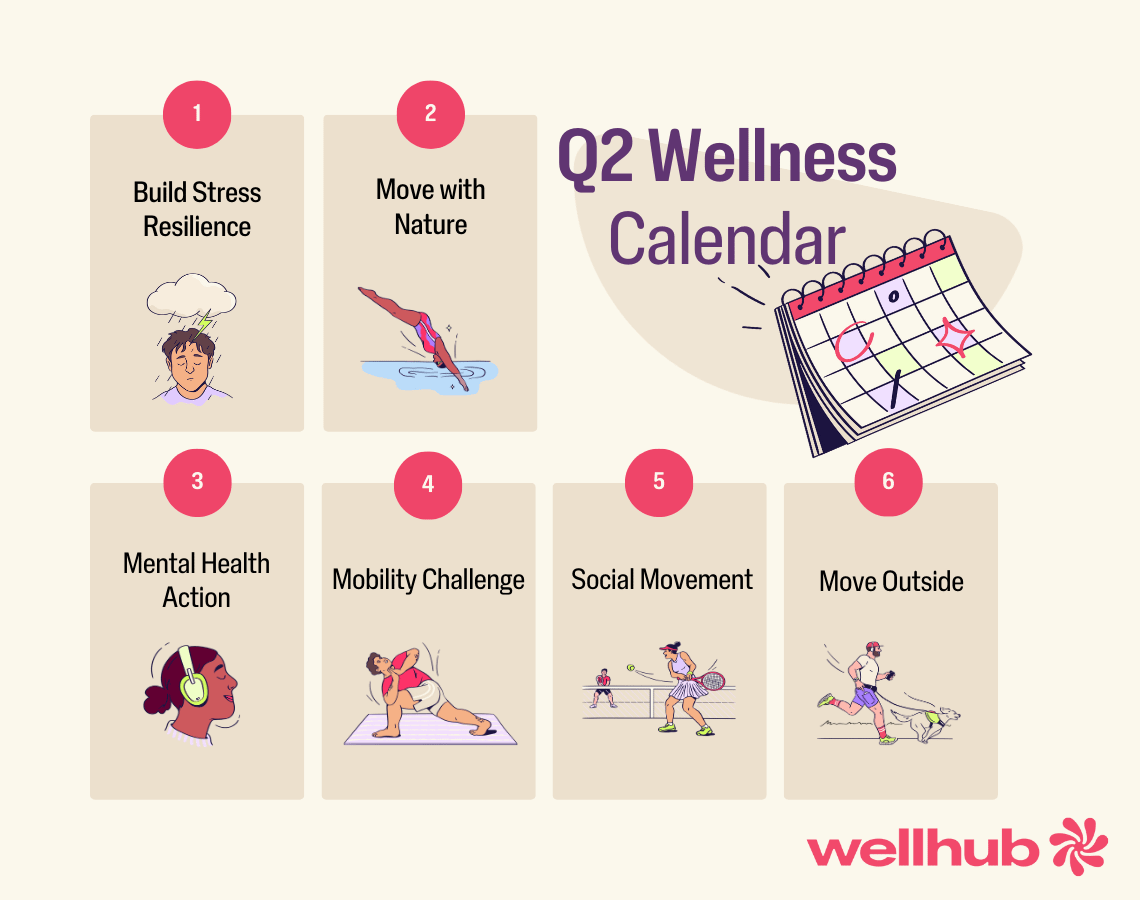
April: Stress Awareness + Movement in Nature
Theme: Lighten the Load — Mentally and Physically
April is both Stress Awareness Month and Earth Month, which gives you a powerful opportunity to promote mental clarity and nature-based movement. This is when employees are craving lightness — longer days and outdoor breaks.
Wellness Activity 1: Build Stress Resilience
Programming Idea: “Less Stress, More Strength” Toolkit
- How it works: Offer a 4-week content drip focused on small stress-reduction habits: breathwork, morning movement, gratitude journaling, and end-of-day rituals.
- Tools to use: Headspace and Fabulous for daily mindfulness prompts, meditations, and resilience-building practices.
- How to deliver it: Use email, Slack, or your HRIS to send one tip or prompt per day. Anchor each week with a theme: Calm, Focus, Gratitude, Recovery.
- Deeper engagement: Launch an “Ask Me Anything” with a therapist or resilience coach to normalize mental health conversations in the workplace.
- Manager activation: Provide a manager guide to help team leads spot signs of burnout and integrate mini wellbeing moments into daily standups.
Wellness Activity 2: Move with Nature
Programming Idea: “Earth Month Movement Challenge”
- How it works: Encourage employees to spend 20 minutes outside daily — walking, stretching, or exercising. Tie this into a step goal using Strava or Fastic.
- Why it works: Movement in nature has measurable effects on stress, focus, and sleep. Combining physical activity with environmental awareness also boosts intrinsic motivation.
- Gamification idea: Set team-based targets for total outdoor minutes logged or locations explored — even encourage photo sharing for a “Where We Moved” board.
What to measure:
- Daily outdoor movement logs
- Stress check-in survey (start vs. end of month)
- App log-ins or session completions on Headspace or Fabulous
May: Mental Health + Mobility
Theme: Support the Mind, Strengthen the Body
May is Mental Health Awareness Month, which makes it one of the most important — and most visible — moments on the wellness calendar. Employees are more open to conversations about stress, burnout, and emotional wellbeing right now. The opportunity for HR is to move beyond awareness and into practical, everyday support.
Wellness Activity 1: Mental Health Awareness That Drives Action
Programming Idea: “Check In, Not Burn Out” Month
Awareness alone isn’t enough. Employees need permission, tools, and structure to prioritize their mental health — especially during a busy spring push.
How to run it:
- Launch the month with a clear message from leadership reinforcing that mental wellbeing is a priority, not a personal failure.
- Offer weekly themes such as:
- Week one: Stress and workload balance
- Week two: Emotional regulation and resilience
- Week three: Boundaries and recovery
- Week four: Reflection and habit-building
- Week one: Stress and workload balance
- Encourage employees to engage with guided meditation, journaling, or self-reflection tools through Headspace, Meditopia, or Ifeel Self Care.
Manager enablement: Provide managers with conversation starters and guidance for 1:1 check-ins. This helps normalize mental health conversations without putting pressure on employees to disclose more than they’re comfortable with.
What to measure:
- Participation in mental wellbeing resources
- Attendance at workshops or live sessions
- Qualitative feedback on psychological safety and support
Here’s how to find a whole-person wellness program that boosts performance.
Wellness Activity 2: Mobility and Injury Prevention
Programming Idea: “Move Better” Mobility Challenge
Mental health and physical health are deeply connected. Mobility-focused movement helps reduce stress, prevent injury, and improve energy — especially for desk-based teams.
How to run it:
- Invite employees to complete three to four mobility or flexibility sessions per week.
- Highlight low-impact, accessible classes from partners like Club Pilates, SLT, CorePower Yoga, Pure Barre, or The Bar Method.
- Offer short, 10–15 minute movement breaks employees can complete between meetings.
Why it works: Mobility-focused challenges feel approachable and inclusive. They appeal to employees who may be burned out on high-intensity fitness or new to movement altogether.
HR tip: Position mobility as a productivity tool, not a fitness goal. Better movement leads to fewer aches, less fatigue, and stronger focus.
June: Social Wellness + Outdoor Energy
Theme: Move Together and Build Belonging
June brings longer days, warmer weather, and a natural lift in energy. It’s the perfect time to lean into social connection and outdoor movement — two drivers of engagement that often drop off in remote and hybrid environments.
Wellness Activity 1: Social Wellness Through Shared Movement
Programming Idea: “Move Together” Team Challenge
Social wellness is about feeling connected, supported, and part of something bigger. In June, movement becomes the vehicle for that connection.
How to run it:
- Create department or cross-functional teams and set collective goals like total steps, minutes of activity, or class check-ins.
- Encourage tracking through Strava, MyFitnessPal, or Fastic.
- Promote group-friendly fitness partners such as Orangetheory Fitness, F45, Barry’s, Zumba, or Crunch Fitness.
Community-building ideas:
- Walking meetings or lunchtime group walks
- Team fitness outings or virtual class sign-ups
- Friendly competitions focused on participation, not performance
What to reward: Recognize teams for collaboration, consistency, and creativity — not just top scores.
Wellness Activity 2: Outdoor Wellness and Sunlight Exposure
Programming Idea: “Get Outside”
Outdoor time is a simple, powerful wellbeing lever. It supports mental health, improves sleep, and boosts overall mood — all with minimal cost.
How to run it:
- Encourage employees to spend at least 20 minutes outside each day.
- Allow flexibility for outdoor breaks, walking lunches, or end-of-day movement.
- Tie participation to outdoor-friendly activities like cycling, yoga, or bootcamp-style workouts with community fitness partners
Gamification idea: Create an internal map or shared board where employees log outdoor activities or locations — turning movement into a storytelling moment across teams.
What to measure:
- Participation in outdoor activities
- Engagement in team challenges
- Self-reported mood or energy levels at month’s end
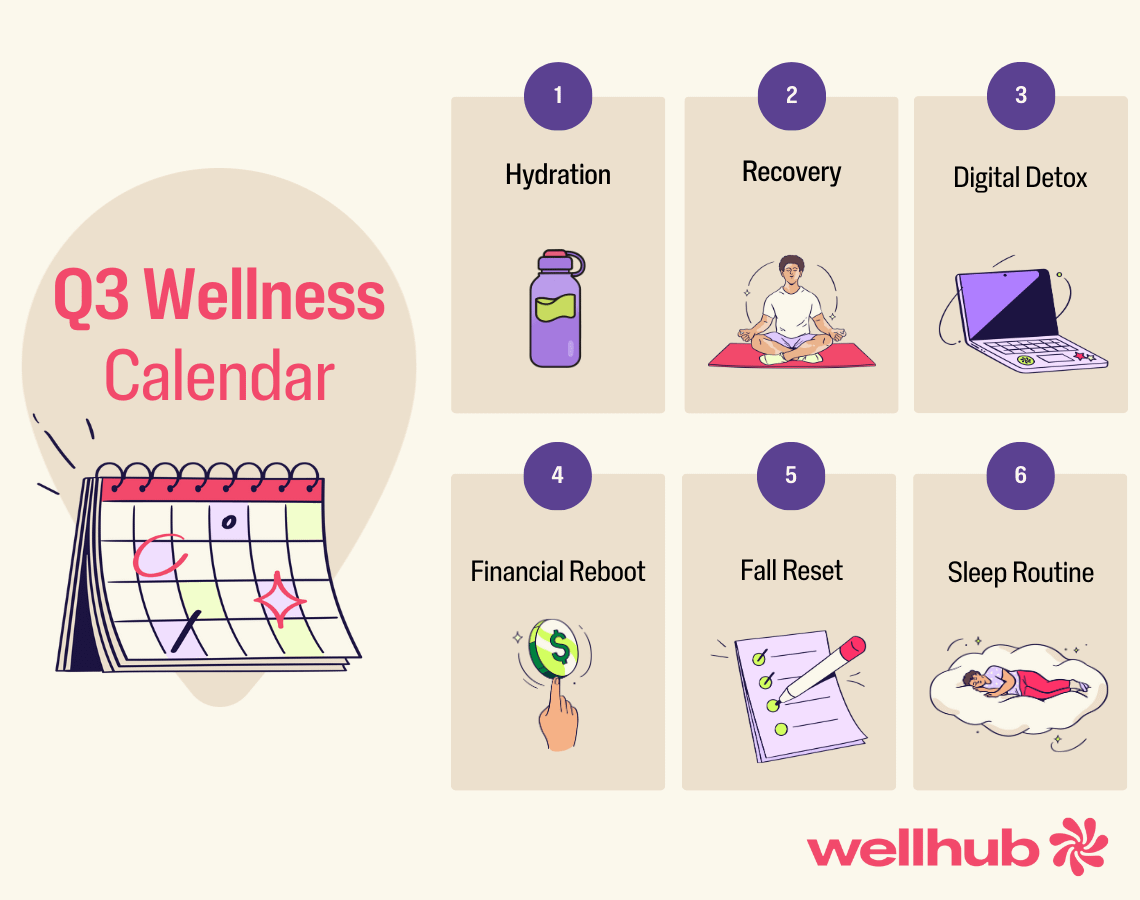
July: Hydration + Recovery
Theme: Beat the Heat, Build in Recovery
July is a high-risk, high-opportunity month for HR teams. Between long weekends, vacations, and rising temps, employee energy and productivity can start to dip. But instead of fighting the slowdown, you can lean into recovery-focused wellness programming that helps your people feel rested, hydrated, and recharged — not burned out.
Wellness Activity 1: Hydration Habits That Actually Stick
Programming Idea: “Hydration Nation” Month-Long Challenge
How to run it:
- Invite employees to track their water intake daily with a goal of 64 oz (or half their body weight in ounces).
- Use apps like Fastic or Lifesum that include hydration tracking features.
- Encourage habit-stacking by pairing water tracking with other positive routines (e.g., take a 5-minute walk every time you refill your bottle).
Gamification ideas:
- Weekly leaderboards or team goals
- “Most Creative Water Bottle” photo contest
- Badges for consistency over time
Why it works: Hydration affects energy, concentration, digestion, and even sleep. By supporting this one behavior, you create positive ripple effects across wellbeing.
We made it easy: Launch your wellness program with this step-by-step guide.
Wellness Activity 2: Movement and Recovery Balance
Programming Idea: “Recharge Your Routine” Recovery Series
How to run it:
- Offer a series of guided classes focused on recovery: stretching, foam rolling, breathwork, and low-impact movement.
- Make it inclusive: 10–20 minute sessions delivered live or on demand.
Optional layer: Encourage employees to book a “recovery hour” each week — no meetings, no email, just movement or mindfulness.
Why it works:
- High-output teams need recovery to avoid burnout. Especially in hot months, promoting restoration (instead of pushing intensity) creates better long-term outcomes — for people and for performance.
What to measure:
- App check-ins for hydration and movement tracking
- Participation in recovery-focused classes
- Feedback on energy levels and stress
August: Digital Boundaries + Financial Reset
Theme: Reclaim Attention, Restore Focus
August can feel like a blur — inboxes overflow, meetings stack up, and Q3 goals loom large. This is your moment to help employees reclaim control of their time, tech, and finances before fall kicks into gear.
Wellness Activity 1: Digital Detox + Attention Management
Programming Idea: “Unplug August” Challenge
How to run it:
- Invite employees to reduce screen time in small, achievable ways: no scrolling before 9 a.m., screen-free lunch breaks, app timers, or one tech-free hour per evening.
- Use tools like Fabulous to facilitate habit tracking.
- Encourage Slack check-ins where employees share how unplugging impacted their focus, sleep, or mood.
Optional addition: Host a “Digital Declutter” day — encourage teams to cancel unnecessary meetings, turn off notifications, and do a calendar cleanup.
Manager tip: Provide managers with guidelines for supporting flexible focus — including encouraging asynchronous work or walking meetings.
Why it works: Digital overwhelm is a massive stressor. Giving people permission (and tools) to unplug improves cognitive function, stress regulation, and even physical health.
Wellness Activity 2: Financial Health Reboot
Programming Idea: “Back-to-Budget” Financial Reset
How to run it:
- Invite employees to set one short-term and one long-term financial goal.
- Offer workshops or drop-in Q&A sessions on budgeting, debt reduction, and benefits education.
- Promote tools like EveryDollar and Mobills for goal tracking.
Engagement ideas:
- Challenge employees to complete a “No-Spend Weekend”
- Create a resource hub with savings calculators, plan comparison tools, and curated partner content
- Spotlight real stories from employees who made a money move (e.g., paid off a credit card, started an HSA, refinanced a loan)
Why it works: Money stress is pervasive, but it often feels taboo. Creating a structured but judgment-free space for financial reset helps employees feel more secure — and more focused.
What to measure:
- Attendance at financial education sessions
- Engagement with budget tools
- Employee feedback on stress or confidence related to money
September: Routine Reset + Sleep Health
Theme: Reset, Refocus, Rebuild Healthy Habits
September has that “second New Year” energy. Summer schedules are winding down, kids are back in school, and employees are ready to re-establish routines. This is the perfect time to help your team reset their daily rhythms and rebuild habits that may have slipped mid-year.
Wellness Activity 1: Fall Reset Campaign
Programming Idea: “Fresh Start September” Wellness Reset
How to run it:
- Launch a 3-week, multi-focus wellness challenge combining movement, nutrition, and mindfulness.
- Let employees personalize their goals:
- Commit to 20 minutes of movement per day (walk, stretch, studio class)
- Add one healthy meal habit (meal prep, hydration, more greens)
- Try one new emotional wellness tool (gratitude journaling, guided meditation)
Partners to use:
- Movement: Strava, Trainiac, Crunch Fitness
- Nutrition: Nutrium, BodyFast
- Mindfulness: Headspace, Ifeel, Meditopia
Incentive idea: Offer a “Reset Reward” for anyone who completes three wellness check-ins per week for three weeks — think: extra PTO or a small wellness stipend.
Why it works: This format gives employees autonomy without overwhelming them. It also reconnects them with existing benefits they may have forgotten about over the summer.
Here's how to launch a wellness program that lifts engagement and lowers costs.
Wellness Activity 2: Sleep Routine Reinforcement
Programming Idea: “Sleep Strong” Accountability Series
How to run it:
- Run a 10-day sleep hygiene challenge focused on creating better bedtime habits.
- Invite employees to track their sleep with Sleep Cycle or Bettersleep, aiming for at least 7 consistent hours per night.
- Offer prompts like:
- Set a digital curfew
- Use a meditation or breathing exercise before bed
- Create a consistent wind-down time each night
- Set a digital curfew
Optional programming: Host a sleep-focused webinar with a health coach or sleep expert, titled “How Sleep Impacts Focus and Performance.”
What to measure:
- Sleep tracking check-ins
- Attendance at sleep or stress management workshops
- Self-reported energy and mood levels
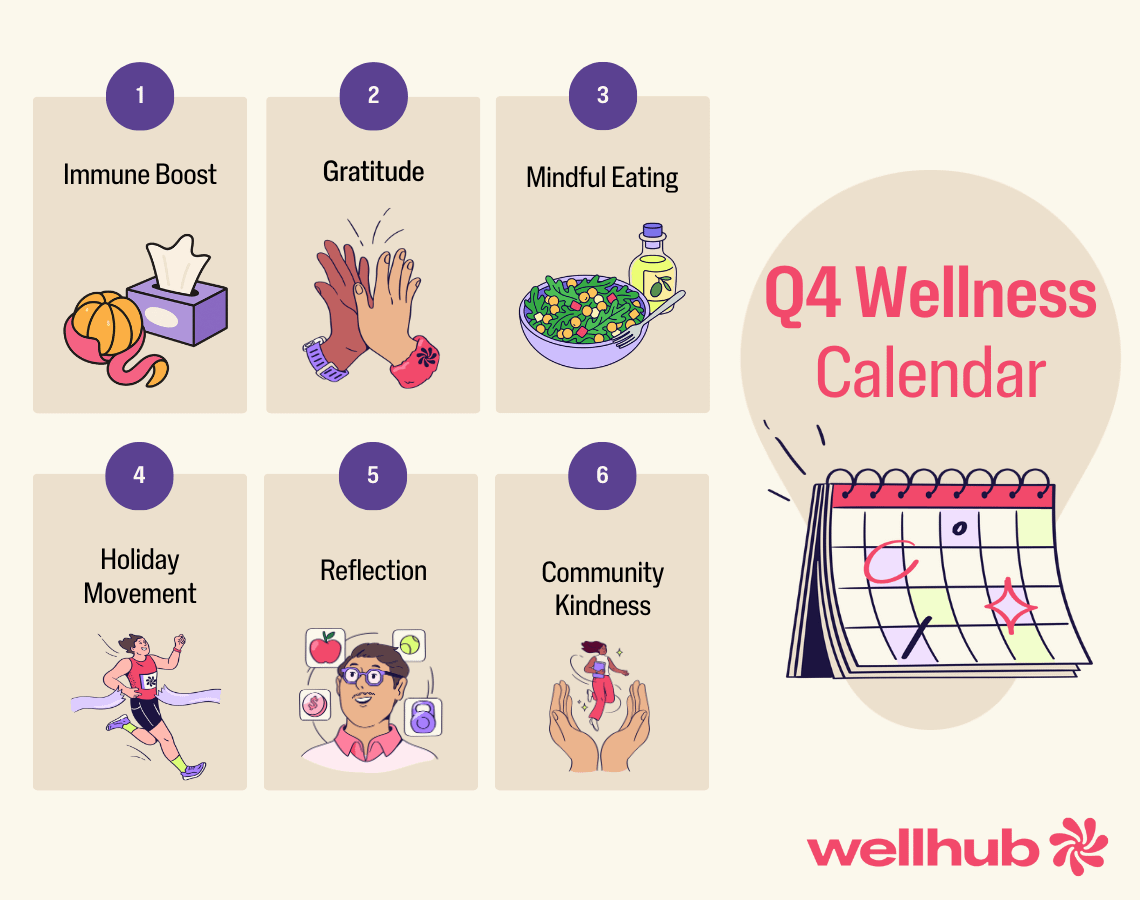
October: Immune Health + Gratitude
Theme: Build Resilience. Reinforce Belonging.
As flu season starts to ramp up, October is your opportunity to support immune health and emotional wellbeing at the same time. It’s also the beginning of a high-stress stretch of the year — so reinforcing gratitude and connection now creates a strong foundation for the months ahead.
Wellness Activity 1: Immune-Boosting Habits
Programming Idea: “Immunity Booster” Challenge
How to run it:
- Invite employees to complete four immune-supporting actions each week:
- Move daily (even a walk counts)
- Eat at least one nutrient-dense meal per day
- Prioritize rest (7–8 hours sleep)
- Take a screen break to reduce stress
Partners to use:
- Movement: Orangetheory, Barre3, Solidcore, 24 Hour Fitness
- Nutrition: Lifesum, Nutrium, MyFitnessPal
- Sleep: Sleep Cycle, Rise Science
Bonus idea: Offer a flu shot clinic or create a “Healthy Desk Checklist” employees can follow to keep germs (and burnout) at bay.
Why it works: This challenge reinforces a proactive approach to health that goes beyond hand sanitizer. It helps employees protect their energy and reduce absenteeism — both of which impact productivity in Q4.
Wellness Activity 2: Gratitude and Positive Reflection
Programming Idea: “Gratitude at Work” Campaign
How to run it:
- Invite employees to participate in a 10-day gratitude journaling challenge.
- Offer daily prompts like:
- What made you feel accomplished today?
- Who made your day easier this week?
- What are you most proud of this month?
- What made you feel accomplished today?
Tools to use:
- Meditopia and Headspace for guided journaling and reflection
- Fabulous for gratitude tracking paired with habit coaching
Team activation idea: Create a shared “Wall of Gratitude” where employees can post anonymous thank-yous or shoutouts to coworkers.
Why it works: Gratitude reduces stress, improves mood, and builds community. Creating space for reflection can be especially powerful before the end-of-year rush.
What to measure:
- Daily participation in journaling or reflections
- Manager-reported team engagement or morale
- Peer-to-peer recognition rates
Support employee wellbeing with any of these 30 workplace wellness activities.
November: Mindful Holidays + Movement
Theme: Stay Grounded, Stay Moving
November kicks off a season that can be joyful, stressful, and incredibly busy — all at the same time. This month is about helping employees create intentional boundaries, maintain movement, and manage holiday pressure with practical, low-lift wellness strategies.
Wellness Activity 1: Mindful Eating and Holiday Balance
Programming Idea: “Healthy Holidays Toolkit” Campaign
How to run it:
- Offer employees a curated digital toolkit with:
- Mindful eating prompts
- Nutrition-friendly holiday recipes
- Portion-planning tips
- Support for navigating social eating and family routines
- Mindful eating prompts
- Highlight Wellhub partners like Nutrium, Lifesum, and MyFitnessPal for meal logging and tracking energy throughout the day.
Optional activations:
- Invite a registered dietitian for a “Holiday Eating Without Guilt” workshop
- Run a “Healthy Swap” recipe contest — employees submit their favorite feel-good holiday dishes
Why it works: This isn't about restriction. It's about helping employees feel in control — physically and emotionally — during a season that often throws both off track.
Wellness Activity 2: Holiday Movement Motivation
Programming Idea: “Turkey Trot Challenge” (No Running Required)
How to run it:
- Create a 10-day step challenge or “Movement Bingo” during the week before and after Thanksgiving.
- Give employees flexibility: any activity counts — walking the dog, dancing while meal-prepping, 10-minute stretch breaks.
- Use tools like Strava, Snap Fitness, or Crunch Fitness to track progress and encourage consistency.
Engagement idea:
- Create teams by location, department, or even family groups (spouses and kids can join too)
- Offer custom Wellhub incentives like bonus app credits or fitness gear for active participants
Why it works: Movement helps reduce the mental and physical drag that comes with holiday stress and food overload. Framing this as fun, flexible, and inclusive makes it stick.
What to measure:
- App log-ins and check-ins
- Participation in team challenges
- Self-reported energy and stress levels
December: Reflection + Joy
Theme: End the Year Strong — and Well
December is not the time to launch big new wellness goals. Instead, it’s your chance to help employees reflect, recharge, and enter the new year feeling proud, grounded, and supported.
Wellness Activity 1: Year-End Reflection and Mental Recovery
Programming Idea: “Reset + Reflect” Digital Journal Series
How to run it:
- Offer a series of self-guided prompts delivered over 1–2 weeks
- Focus topics on:
- What they accomplished in 2026
- What habits or boundaries they want to carry forward
- What they’re grateful for in their work, health, or relationships
- What they accomplished in 2026
Tools to use:
- Ifeel, Meditopia, or Headspace for guided journaling and reflection
- Fabulous for tying reflections to daily routines and future goal setting
Optional add-on: Create a shareable “2026 Wellness Recap” template where employees can summarize their year — movement tracked, habits built, challenges completed.
Why it works: Employees rarely stop to acknowledge how far they’ve come. Ending the year with intentional gratitude and personal wins builds internal motivation heading into January.
Wellness Activity 2: Community + Kindness
Programming Idea: “Give Back December” Challenge
How to run it:
- Invite employees to participate in daily or weekly acts of kindness
- Options can include:
- Donating to a cause
- Volunteering time (individually or as a team)
- Writing a note of appreciation to a colleague
- Sharing resources or meals with someone in need
- Donating to a cause
How to scale it:
- Create a virtual “Kindness Tracker” or map showing collective impact
- Host an optional company-wide volunteering event (virtual or local)
Why it works: Gratitude, generosity, and human connection are powerful antidotes to holiday overwhelm. This type of initiative also helps foster cross-team connection and a values-driven culture.
What to measure:
- Acts of kindness tracked
- Participation in team or community events
- Employee stories and photos shared internally
And that wraps the year!
Help Employees Follow Through on Their Goals With a Wellbeing Program
January sets the stage for habit change — but most resolutions collapse under stress, exhaustion, or lack of support. HR teams face high drop-off rates as energy fades and employees struggle to maintain momentum without structured guidance.
An employee wellbeing program gives people the tools and motivation to keep going: 89% of employees say they perform better when they prioritize their wellbeing.
Speak with a Wellhub team member to turn resolutions into long-term behaviors.

Company healthcare costs drop by up to 35% with Wellhub*
See how we can help you reduce your healthcare spending.
Category
Share
The Wellhub Editorial Team empowers HR leaders to support worker wellbeing. Our original research, trend analyses, and helpful how-tos provide the tools they need to improve workforce wellness in today's fast-shifting professional landscape.
Subscribe
Our weekly newsletter is your source of education and inspiration to help you create a corporate wellness program that actually matters.
Subscribe
Our weekly newsletter is your source of education and inspiration to help you create a corporate wellness program that actually matters.
You May Also Like

Corporate Wellness Trends HR Must Know for 2026 | Wellhub
See the top 2026 wellness trends shaping performance, retention, and culture—plus how HR can build a unified, ROI-driven wellbeing strategy.

Wellness Points Programs: Boost Employee Health & Engagement | Wellhub
Turn your workplace wellness strategy around with a points program that rewards healthy behavior with perks, from extra time off to gift cards.

Employee Financial Wellness Programs: Ultimate HR Guide | Wellhub
Create an effective financial wellness program that supports your employees in their financial needs, boosting productivity and retention.