The Ultimate Guide to Small UK Business Wellness Programmes in 2026
Last updated on 20 Mar 2026

Your employees are the driving force behind your small business. Their energy, creativity, and resilience keep things moving forward, so their wellbeing is essential to your company’s success. When employees burn out, productivity drops and costs rise quickly. Absenteeism is especially tough for small teams, and healthcare expenses can cut into your profits. Talented people may leave for companies that care more about their wellbeing. All of this can slow your growth before it even gets going.
The good news is that wellness programs don’t have to be costly or complicated to make a real impact. By using a few simple and affordable strategies, small businesses can lower costs, keep employees longer, and build stronger teams. This also helps you stand out as a great place to work.
Are you ready to see how wellness can be one of the best investments for your business? Let’s look at some low-cost, high-impact ways to make wellbeing a key part of your company’s success.
What are Wellness Programs for Small Businesses?
Wellness programs for small businesses, meaning companies with 50 or fewer employees, are meant to support the physical, mental, and emotional health of their teams.
These programs are designed to make a real difference without requiring a big budget or a large HR team. They offer activities, benefits, or policies that help employees succeed both at work and at home. Some examples are:
- Physical health support might includestep challenges, healthy snack options, or sleep support apps.
- Mental wellbeing support can involve mindfulness breaks, stress management workshops, or access to counseling.
- Work-life wellness initiatives may include flexible schedules, volunteer days, or digital detox hours.
- Financial and social wellbeing can be supported throughfinancial literacy sessions, community service opportunities, or peer-led wellness groups.
For small businesses, wellness programs are usually simple and affordable. Unlike larger companies with full wellness budgets, small businesses often start with low-cost, high-impact ideas that can expand as the business grows.
What it Costs to Implement Health & Wellness Programs at a Small Businesses
Corporate wellness is one of the smartest and most affordable investments a small business can make. While there are some up-front costs, both direct and indirect, these programmes usually pay off in the long run.
Seventy-eight percent of CEOs say their wellness investments deliver returns greater than 50%, and nearly a third see ROI above 100%. That means they get $2 back for every $1 invested. These gains come from reduced absenteeism, lower healthcare costs, and better employee productivity.
These programs also do not require a huge investment. For example, you can start at £0 per month with our digital plan and access mindfulness and self-care apps. Clearly, wellness programs make your budget go much further and benefit everyone on your team.
When small business leaders see wellness as a way to save money and drive growth, rather than as a luxury, they can recognize it as an essential part of long-term success.
Direct vs. Indirect Costs for Small Business Wellness Programs
Direct Costs
Direct costs are the expenses you can easily see in your budget. They depend on the size of your programme, but there are options for almost any budget.
- Wellness platforms and apps: You might pay for subscriptions to services like Wellhub, meditation apps, or online exercise classes. These give employees access to many resources they can use whenever it suits them.
- Incentives and rewards: Offer prizes such as wellness stipends, fitness trackers, or gift cards. Free options, such as public recognition, extra paid time off, or flexible schedules, can also encourage people to join in.
- On-site and virtual activities: Yoga classes, mindfulness workshops, or nutrition seminars can sometimes be offered for free through community partners or for a small fee if you hire outside experts.
- Preventive health screenings and flu shots: Working with local clinics for yearly screenings or hosting flu shot clinics can help lower future healthcare costs.
- Equipment and supplies: Small businesses may purchase items such as resistance bands, water stations, or ergonomic tools to support daily wellness at work.
Indirect Costs
Indirect costs are harder to see, but they are important for making wellness programs work. These costs are usually about time and effort, not money.
- Administrative coordination: Even modest programs require someone to manage sign-ups, answer questions, and track engagement. Forming a cross-departmental wellness committee can spread out the workload.
- Promotion and communication: To keep wellness in focus, use newsletters, Slack, intranet posts, or kickoff events to spread the word. These efforts need regular attention more than money.
- Engagement strategies: Creating a wellness culture takes ongoing effort. You might need to update activities, change up challenges, or ask employees for feedback to keep people interested.
- Training and education: Training wellness leaders, offering webinars, or sharing self-guided resources helps employees get more from the program. Free online materials and community programs can keep costs low.
- Opportunity cost of participation: When employees take a stretch break or join a meditation session, they are away from their desks for a short time. However, these breaks help reduce stress and improve focus, so the time spent is gained back through better productivity.
How Small Businesses Can Budget for Wellness Programmes
Budgeting for a wellness programme doesn’t have to be complicated. Spend money on what’s important to your business and your team. With a clear plan, you’ll get the most out of your investment and keep your wellness program running well.
Step 1: Define Your Budget Parameters
Choose how much of your HR or benefits budget you want to put toward wellness. Even a small amount is fine.
The key is to be consistent and connect your spending to results, such as fewer absences, better morale, or lower healthcare costs.
Step 2: Prioritize High-Impact Initiatives
Choose wellness ideas that deliver results without breaking the bank. Walking meetings, flexible work hours, or using a wellness app can all offer good benefits and help you stick to your budget.
We also recommend you reading: Workplace Wellbeing (15 initiatives & ideas for UK companies)
Step 3: Account for Direct and Indirect Costs
Direct costs, such as subscriptions, incentives, or workshops, are easy to track and plan for. Indirect costs, like the time managers or HR staff spend organizing activities, are less obvious but just as important.
Make sure to include both, so you understand your program’s real investment.
Step 4: Plan for Growth Over Time
You don’t need to launch a large wellness program right away.
Start with simple, low-cost ideas, track how people take part and what results you see, and grow your program as you show its value. Taking small steps makes wellness easier to manage and expand.
Goal-Oriented Budgeting Template for Small Business Wellness Programmes
To make wellness budgeting practical, connect each pound or percentage of your HR budget to a clear business goal. This helps you show leadership not only in what you’re spending, but also why you’re spending it and what results you expect.
For example, consider this template:
| Business Goal | Wellness Investment Examples | Estimated Budget Allocation | Expected Impact / ROI Metric |
| Boost Retention & Engagement | Recognition programs, peer-led wellness groups, team challenges, volunteer days | £ or % of budget | Example: Reduce turnover by % within 12 months |
| Improve Productivity & Focus | Stress management workshops, mindfulness sessions, ergonomic upgrades, flex time | £ or % of budget | Example: Increase productivity by % (measured via output or engagement survey) |
| Control Healthcare Costs | Preventive screenings, flu shot clinics, nutrition workshops, activity challenges | £ or % of budget | Example: Lower healthcare claims by % or reduce absenteeism by days/employee |
| Strengthen Employer Brand | Wellness fairs, community service initiatives, flexible wellbeing stipends | £ or % of budget | Example: Improve employer brand score by points or increase candidate acceptance rates by % |
How to use this template:
- Pick one or two main goals for the year, such as retention or controlling healthcare costs.
- Divide your budget among the categories that will help you reach those goals.
- Set clear ways to measure success from the start, such as retention rate, engagement scores, or fewer sick days.
- Check your progress every quarter and make changes based on the results.
Advantages of Small Business Wellness Programmes
- Positive Return on Investment
Wellness programs can help companies of any size increase profits. Our report about Return on Wellbeing 2025 report found that 79% of small business CEOs see a positive return on their wellness investments.
- Improved Talent Retention
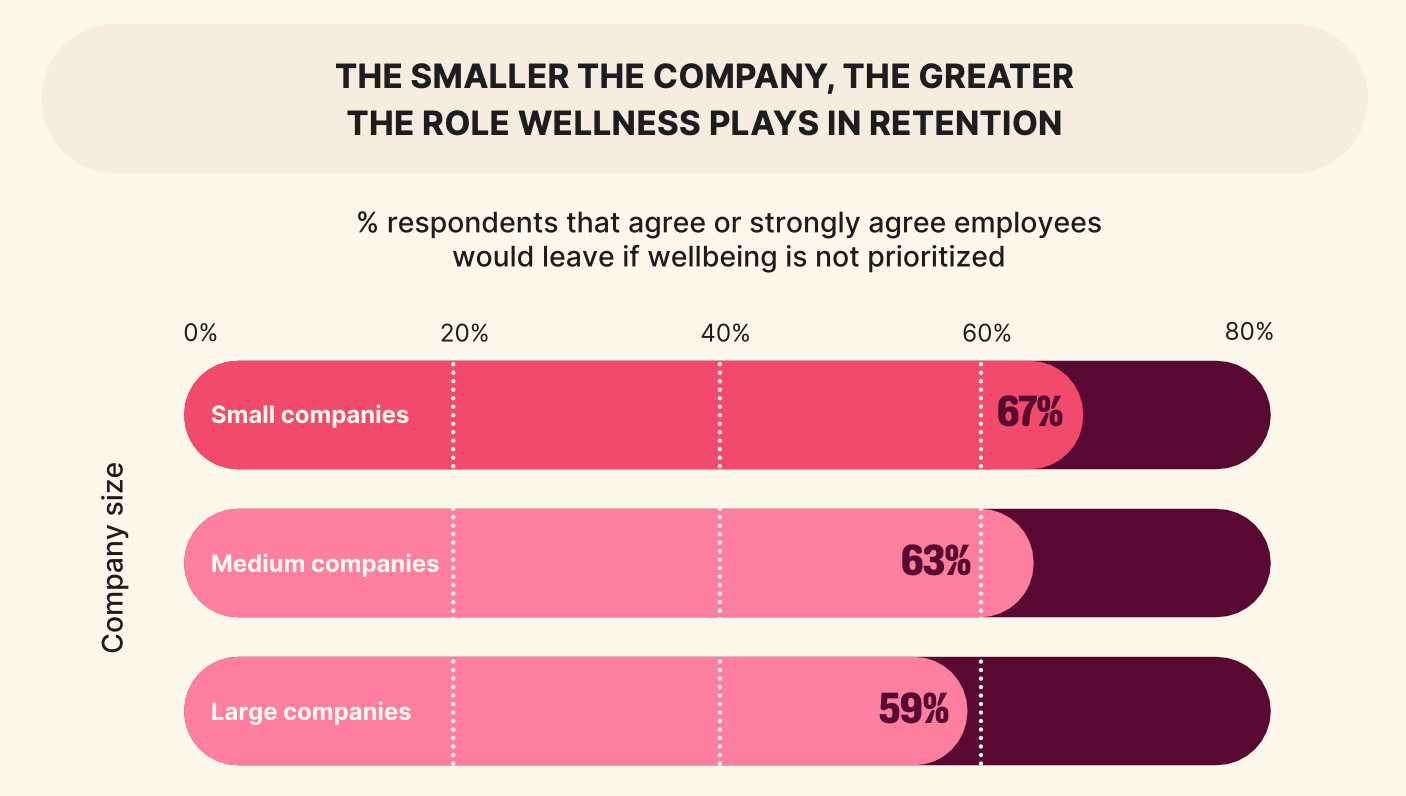
Our same survey found that CEOs at smaller businesses are more likely than those at larger companies to see a direct connection between focusing on wellness and retaining talent.
- Boosted Talent Attraction
Wellness programmes also help attract new employees. Eighty percent of CEOs say these initiatives make it easier to bring in talent, and 42% describe the impact as “extremely” powerful. For small businesses competing with larger companies, a strong wellness program can help level the playing field.
- Stronger Business Performance
Wellness programs do more than make employees happier. They also increase productivity and profits. In the Return on Wellbeing 2025 survey, 97% of CEOs said their wellness program improved productivity, and nearly half saw a strong impact.
The financial benefits are clear: 78% of CEOs reported returns of 50% or more on their wellness investments, and 30% saw more than double their money back. For small businesses, these returns can make a big difference.
- Improved Employee Satisfaction
Wellness programmes also help employees feel more connected to their work. Fifty-two percent of CEOs invest in wellbeing initiatives to boost morale and engagement, and employees notice: 61% of those with a wellness program say they’re happy at their company, compared to just 36% without one.
For small businesses, higher morale leads to lower turnover, better teamwork, and employees who are ready to do their best each day.
- Reduced Absenteeism
Absenteeism costs small businesses more because every absence affects a smaller team. Two-thirds (67%) of CEOs say their wellness program significantly reduces absenteeism. This means fewer sick days, better consistency in customer service, and less pressure on employees who have to cover for others.
- Healthcare Cost Savings
Healthcare is one of the biggest expenses for small businesses, and wellness programs can help manage these costs. Sixty-eight percent of CEOs say their programs directly reduce healthcare spending.
HR leaders agree: 91% reported in 2024 that healthcare costs decreased due to their wellbeing program, up from 78% in 2023. These savings can be significant. For example, healthcare costs for Wellhub users with five or more check-ins per month dropped by 21% a year after starting the programme. In contrast, costs for non-Wellhub users rose by 14%, resulting in overall savings of more than 35%.
- Employee Resilience
Small businesses depend on their teams to be flexible and adaptable. The good news is that 73% of CEOs say their wellness programs are very or extremely effective at building employees' resilience. This means employees are better able to handle stress, adapt to change, and keep moving forward, even when workloads increase.
- Stronger Employer Brand
Wellness programs do more than support employees. They also shape how others see your business. Seventy-six percent of CEOs say wellness initiatives have a big impact on brand perception. For small businesses competing with larger companies, being known as a people-first employer can help attract both customers and job candidates.
20 Low-Cost Wellness Program Ideas for Small Businesses
Wellness initiatives don’t have to be expensive. Many of the best ideas cost little or nothing. For small businesses with tight budgets, affordable wellness programs can help create a caring culture, increase engagement, and even lower turnover.
Here are 20 ideas you can start using right away without spending much:
- Walking meetings: Try taking your meetings outside instead of staying in the conference room. Moving around can boost creativity and help reduce stress.
- Flexible work hours: Let employees adjust their schedules to better balance their wellness needs with their work.
- Mindfulness breaks: Use free meditation apps or offer a short guided session during the week.
- Healthy snack swaps: Replace vending machine candy with fruit bowls or bulk-bought trail mix.
- Hydration challenges: Motivate your team to drink more water by making it a friendly competition.
- Peer-led wellness groups: Tap into employees' talents, such as yoga or strength training, for in-house sessions.
- Wellness newsletters: Share free tips on nutrition, sleep, and exercise from trusted sources.
- Walking or step challenges – Use free apps or spreadsheets to track steps and celebrate progress.
- Financial literacy workshops: Work with local banks or nonprofits to provide free training.
- Gratitude practices: Ask teams to share weekly wins or write thank-you notes.
- Stretch breaks – Schedule optional five-minute desk stretches during long meetings.
- Remote coworking hours –Create a virtual “wellness room” for connection and accountability.
- Healthy potlucks – Organize themed lunches where employees share nutritious dishes.
- Volunteer days: Give employees time off to volunteer in the community. This boosts morale and purpose, and it’s affordable, especially since 35% of workers say their company rarely or never offers time for charity work.
- Desk ergonomics tips: Share simple DIY tips for better posture, stretching, and comfort.
- Sleep hygiene education: Share resources about good sleep habits. This is important since 71% of workers get less than seven hours of sleep each night.
- Gamify wellbeing – Use free leaderboards to track health habits like hydration or mindfulness minutes.
- Low-cost fitness perks – Negotiate discounts with local gyms or explore all-in-one wellbeing platforms.
- Buddy systems – Pair employees to check in on each other's wellness goals, serving as personal wellness champions.
- Digital detox hours – Encourage screen-free time blocks during the day.
By starting simple, you can build momentum toward a stronger culture of wellbeing—and show employees you care about their health as much as their contributions.
We think you might find this guide useful: Wellness Wednesday (30+ ideas to boost your staff wellbeing at work)
7 Best Practices for Employee Enrollment in a Wellness Program
Starting a wellness program is only the beginning. The real measure of success is how many employees join in. In small businesses, every team member matters, so getting people to enroll is essential. Here are some tips to help make sign-ups easy, interesting, and successful.
- Make Enrollment Simple and Accessible
Make signing up fast and simple. Use one main platform or an easy online form instead of paper forms. Let employees know exactly where to sign up, whether it’s a company website, an app, or a shared link.

- Communicate Early and Often
People are more likely to join when they know about the program. Start with a kickoff meeting or launch event, then keep reminding everyone through team meetings, newsletters, Slack messages, or posters in shared spaces.
- Lead with Benefits, Not Features
Talk about the results that matter to employees. For example, rather than just saying “We’re offering yoga classes,” you could say, “This free program can help you lower stress, sleep better, and have more energy for your family.” Employees who see wellness as affordable and easy to join report feeling much better than those who don’t.
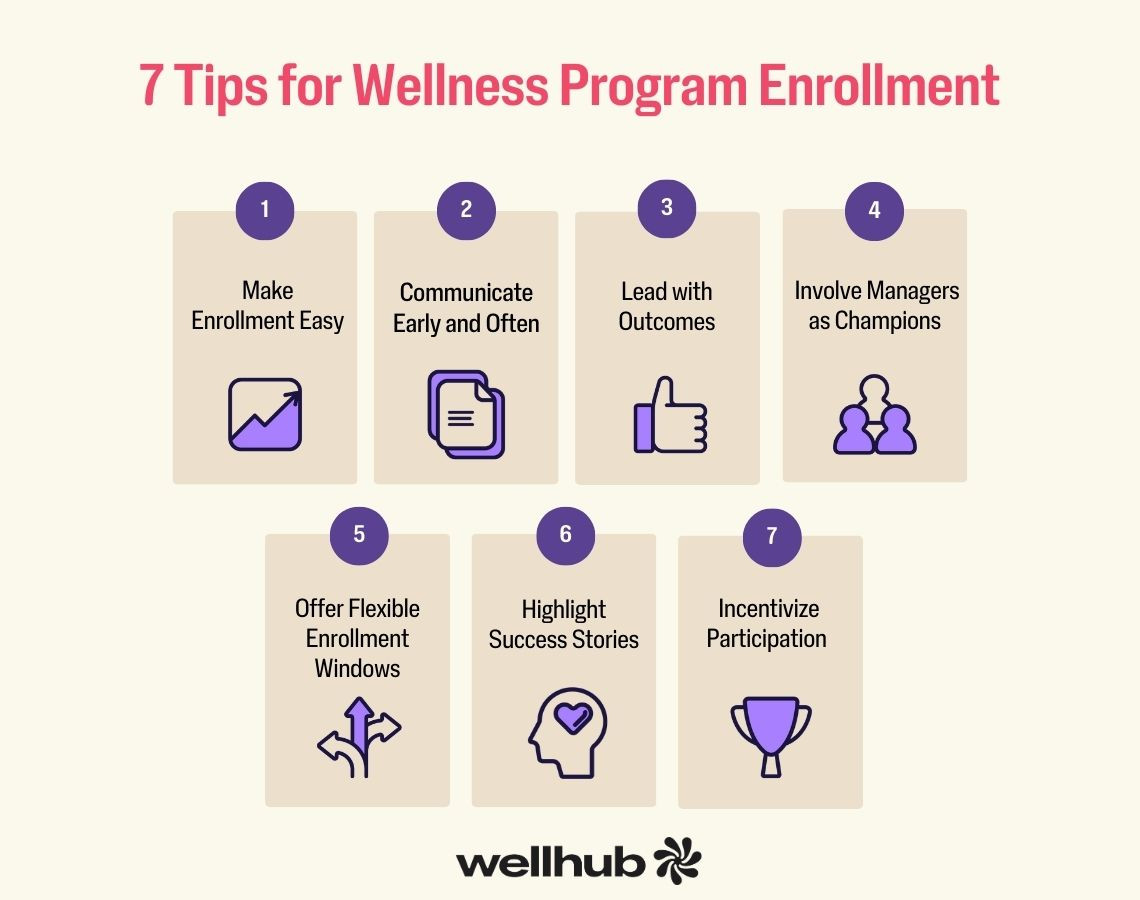
- Involve Managers as "Champions"
Managers connect HR and employees. Ask them to talk about wellness during one-on-one chats and team meetings. When leaders join in, like taking part in a walking challenge or a mindfulness session, employees are more likely to join too.
- Offer Flexible Enrollment Windows
Some employees may not be able to sign up right away. Offer several chances to enroll or let people join at any time. This is especially helpful for small businesses with different work schedules or seasonal jobs.
- Highlight Success Stories
Share stories from employees who have seen results. For example, a coworker saying, “I finally got better sleep thanks to this program,” can have more impact than any HR message. These stories make the program feel real and show how it helps.
- Incentivize Participation
Some employees are eager to join, but others might need a little encouragement. Small rewards like wellness stipends, shout-outs in team meetings, or extra paid time off can boost sign-ups without costing too much.
Wellness Makes Sense—and Money—for Small Businesses
Small businesses often struggle to offer good employee benefits without going over budget. Wellness programs can seem too expensive, but not having them means missing out on lower healthcare costs, fewer absences, and better employee engagement.
Having a platform like Wellhub makes employee wellbeing easier by handling the details. It offers affordable wellness options for businesses of any size, without creating extra work for your team. Get your free quote

Get started on your company's wellbeing journey
Work-life wellness with Wellhub benefits everyone - healthier people, happier companies, proven savings.
Category
Share

The Wellhub Editorial Team empowers HR leaders to support worker wellbeing. Our original research, trend analyses, and helpful how-tos provide the tools they need to improve workforce wellness in today's fast-shifting professional landscape.
You May Also Like

See how to reduce employee health insurance costs | Qualidade de vida, gestão de pessoas e conteúdo para RH
It is important to offer employees a good health insurance plan, although it may not be mandatory in many sectors. Such benefits bring peace of mind and allow employees to focus on the job, not to mention the motivation factor which attracts and retains talents. Moreover, health is wealth. The wise saying makes sense, particularly […]

6 Ways Corporate Team Building Exercises Can Improve Employee Productivity | Qualidade de vida, gestão de pessoas e conteúdo para RH
Why should companies invest in team building? It is like asking why people should invest in their staff; it’s about increasing engagement from staff, in the pursuit of increased productivity which will ultimately provide the sought after, return on investment. Happy & engaged staff make for a better, more productive workplace. The benefits of team […]

How to Raise Awareness About Mental Health in the Workplace | Qualidade de vida, gestão de pessoas e conteúdo para RH
As an organisation leader, you can take steps to make your work environment more accepting for everyone. Here are a few examples about how to improve your company’s response to mental health. Create inclusive policies Policies are the only way to enact change, so evaluate your company’s formal processes to determine what you can do […]