Best corporate wellness programs in 2026 for UK companies
Last updated on 2 Mar 2026
Great workplace wellness programs go beyond offering healthy snacks or occasional breaks. They have the power to change how a company performs.
Burnout is on the rise, healthcare costs keep going up, and many employees feel they don’t get enough support. In fact, only half of UK workers say their organisation puts wellbeing first. This gap is expensive. When health problems are ignored, turnover increases, productivity falls, and companies end up with billions in avoidable costs.
"Traditional" wellness perks are not enough to fix these issues. Companies need high-quality programs.
The best corporate wellness programs in 2026 focus on supporting the whole person. They help employees physically, mentally, financially, and socially, creating a culture where people can do their best work. Companies that invest in this kind of support see lower healthcare costs, better retention, and more engaged teams.
Ready to take your approach further? Discover how top workplace wellness programs get results and how you can bring these benefits to your people and your business.
What is a corporate wellness program?
Corporate wellness programs are company initiatives that provide holistic benefits, resources, and activities to support employees’ physical, mental, emotional, nutritional, financial, and social wellbeing. These programs are designed to improve health, raise morale and job satisfaction, and help organisations attract and retain talent. They also try to reduce healthcare costs by promoting prevention and healthier habits.
Most corporate wellness programs include several elements to meet different needs. They often offer support for:
- Mental and emotional wellbeing: Employee Assistance Programs (EAPs), counseling, mental health days, mindfulness, yoga, and meditation.
- Physical health: gym access, on-site fitness spaces, health screenings and risk assessments, vaccination clinics, fitness challenges, and reimbursements for races or events.
- Financial wellbeing: financial education, coaching, and tools to help with budgeting and planning.
- Healthy work environment: ergonomic workspaces, rest or quiet rooms, healthy food options, and recovery support like stop-smoking programs.
- Social and purpose-driven wellbeing: volunteering opportunities, wellbeing outings, and community initiatives
UK statistics that prove corporate wellbeing is a top priority for HR in 2026
Corporate wellbeing is now a central part of business success, not just a small benefit. Our research onWork-Life Wellness and the Return on Wellbeing shows trends that can help you understand why it matters:
- Burnout is now a major business risk, not only a personal issue: In the past year, 90% of employees reported burnout symptoms, with 39% experiencing them weekly and 18% daily. Globally, burnout costs businesses about $322 billion each year in lost productivity and turnover.
- Employees now view wellbeing as equally important as their pay: 86% of employees say their wellbeing at work is as important as their salary, and 85% would consider leaving a company that does not prioritize employee wellbeing. In the competitive UK job market, wellness is now a key way to keep employees, not just a bonus.
- Stress is increasing, especially for younger employees: 53% of full-time workers say their stress has gone up in the past year. Millennials (56%) and Gen Z (55%) report higher-than-average stress. Since these groups make up most of the UK workforce, HR needs to focus on mental load, flexibility, and recovery to keep teams healthy.
- Wellness directly affects productivity, and employees know this: 89% of employees say they do better at work when they focus on their wellbeing. CEOs agree: 56% say improving performance is their main reason for investing in wellbeing, and 47% say corporate wellness programmes have a big impact on productivity.
- Leaders are already seeing clear returns from wellness programs: 82% of CEOs say their wellness programmes have given a positive return on investment. 78% have seen returns of 50% or more, and 30% report returns of 100% or more.
- Wellbeing strategies are closely linked to keeping and attracting talent: 80% of CEOs say these programmes are very effective for attracting talent, and 73% say they help keep employees. At the same time, 62% of employees say they are more likely to stay if their employer offers strong wellness support.
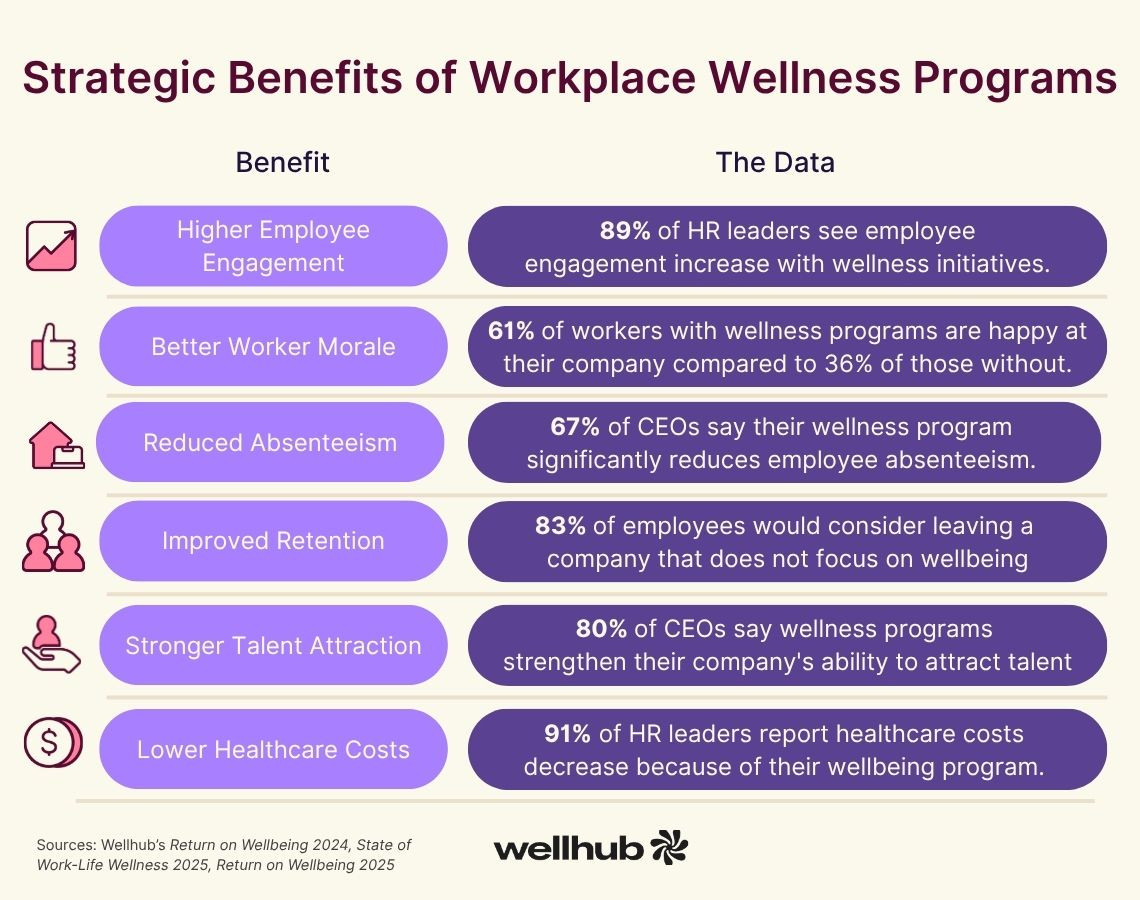
- Wellness programs can greatly reduce healthcare and absenteeism costs: 67% of CEOs have seen a significant drop in absenteeism due to their wellness programs, and 68% say these efforts help lower healthcare costs.
- Employee expectations are rising fast: 53% of employees say their expectations for workplace wellness have increased since the pandemic. For Gen Z, the number is 60%.
- A full approach to wellness is now the standard: 95% of employees agree that physical, mental, emotional, and social wellbeing are all connected. Yet only 14% of companies currently offer structured wellness programs. This shows a major gap and a chance for HR leaders in 2026.
What makes a corporate wellness program the best?
Traditional wellness programs used to focus on just one thing, like gym discounts or step challenges. Now, the best programs support the whole person—physical, mental, emotional, financial, social, and even a sense of purpose—because all these areas are closely linked.
For example, financial stress can lead to anxiety and poor sleep, which then affect physical health and focus. Job stress can also carry over into home life and put a strain on relationships. One perk alone isn’t enough. The best programs support employees in all five of Gallup’s well-being pillars: career, social, physical, financial, and community. Still, only 6 to 15 percent of employees say their employer supports even one of these areas. This shows there is a big gap, but also a big opportunity.
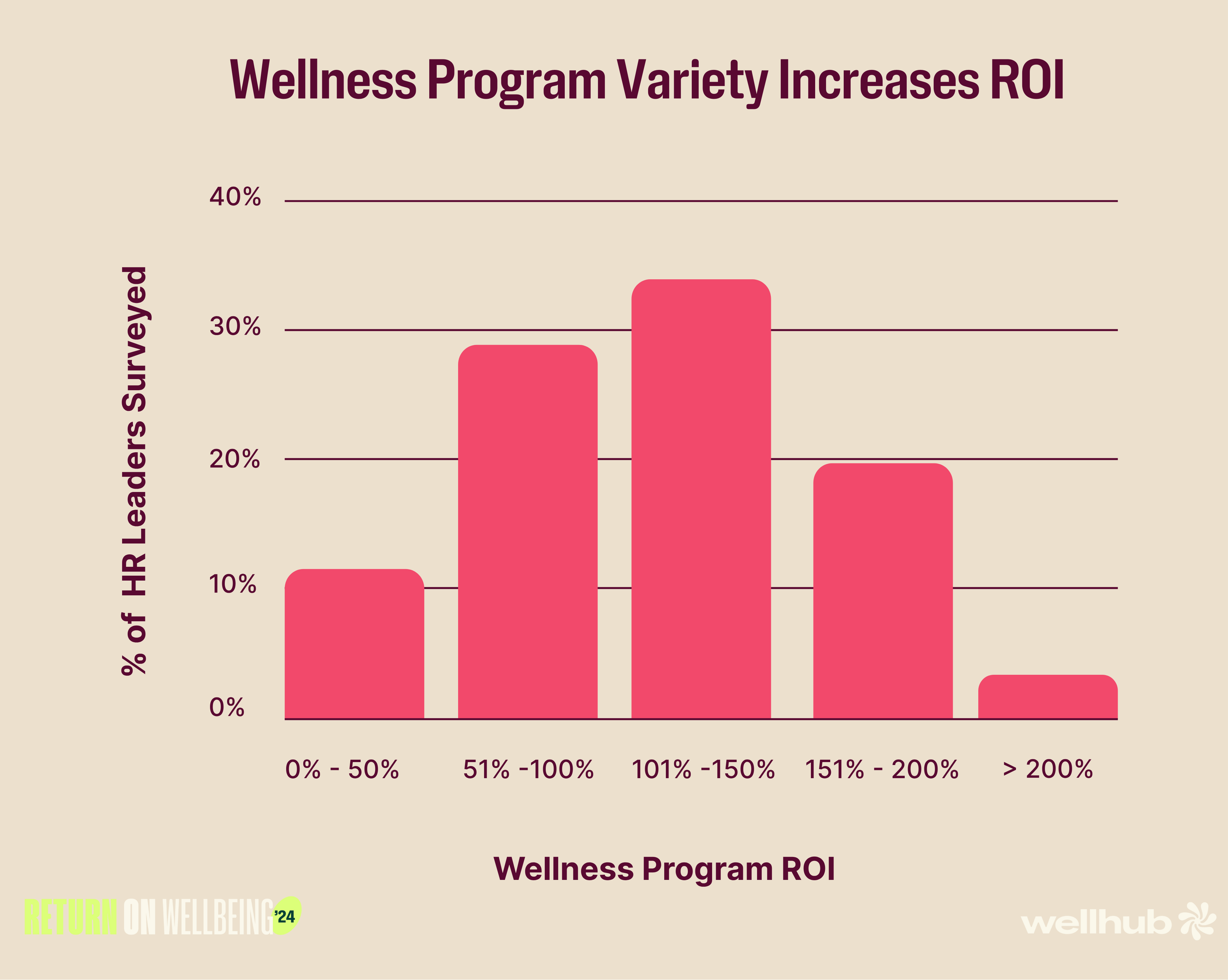
Taking a holistic approach to employee wellbeing brings better results. Wellhub’s recent research found that companies offering four or more wellness options—such as fitness, nutrition, mental health, and financial support—were much more likely to see strong returns on investment. In fact, 24% reached returns of 150% or more, compared to less than 50% ROI for programs with only one or two options. Offering variety and being inclusive helps address the real causes of burnout and disengagement, not just the symptoms.
This approach fits companies of all sizes and industries. McKinsey’s research shows that well-being challenges are common everywhere, from manufacturing to tech. Small businesses might offer flexible hours, a supportive culture, and affordable perks. Larger companies can use platforms like Wellhub to provide personalized wellness programs at scale. The key is to match your programs to your people and culture.
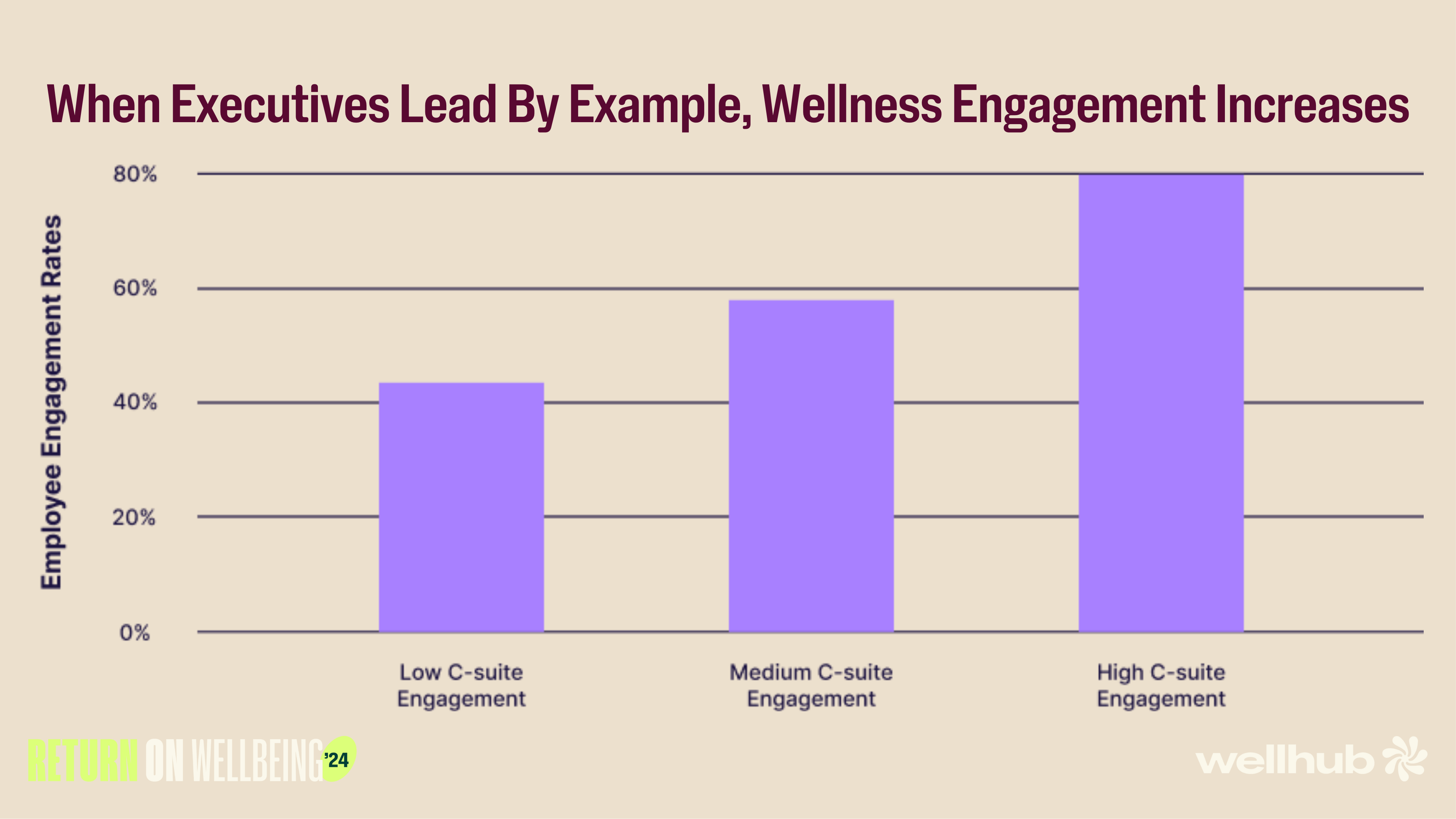
It also helps increase inclusion and leadership involvement. Offering diverse, culturally relevant programs encourages everyone to join in. When leaders set the example, such as CEOs using the wellness app or managers taking mental health days openly, participation rises from 44% to 80%.
Bottom line: Focusing on whole-person wellness is good for everyone. Healthier, happier employees do better work and are more likely to stay with the company. This helps the business grow and makes it possible to invest even more in employee well-being.
Don't forget to read: How to build an effective employee wellbeing strategy in 2026?
4 key elements all the best corporate wellness programs have
The best corporate wellness programs combine different initiatives that support all aspects of well-being.
Below, you'll find examples in four key areas: physical health, mental and emotional health, financial wellness, and social wellbeing. Mix and match these ideas to build a programme that suits your team:
Physical wellness element
A strong corporate wellness program always support employees’ physical health and encourage healthy habits.
Subsidized gym memberships or fitness Apps: Cover part or all of employees’ fitness expenses, especially for flexible, all-access programs. This helps people exercise more often. For example, Wellhub gives employees access to thousands of gyms and classes, making it easy to stay active.
Regular exercise often leads to more energy and higher productivity.
Onsite and virtual fitness classes: Offer group workouts such as yoga, Zumba, or stretching, either in the office or online.
Scheduled wellness breaks, such as a 30-minute yoga class, help desk workers recharge and reduce stress. Virtual classes also include remote and hybrid employees. These activities help people connect and improve their fitness. When leaders participate, it sets a positive example.
Step challenges and walking meetings: Organize friendly step-count competitions with team goals, leaderboards, and prizes to encourage movement.
Recommend walking meetings or one-on-one walks instead of sitting in a conference room. These ideas help people stay active during the workday.
Ergonomic workstations and movement breaks: Provide ergonomic assessments and stipends for quality chairs, standing desks, or monitor setups to reduce strain. Encourage managers to add quick stretch or desk exercises during long meetings or shifts. Even five minutes of stretching can boost circulation and focus. Some companies also invite massage therapists for short chair massages to ease muscle tension.
Onsite health screenings & preventive care: Offer wellness services directly to employees, such as on-site flu shot clinics, biometric screenings like blood pressure or cholesterol checks, or mobile clinics for health risk assessments. Convenient preventive care leads to early detection and prevention.
In fact, 91%of HR leaders say healthcare costs go down when employees join preventive wellness programs. Finding issues early can save lives and reduce expenses.
Healthy nutrition options: Physical wellness includes good nutrition, not just exercise. Stock break rooms and cafeterias with healthy snacks like fruit, nuts, and yogurt, rather than just chips and soda. Add hydration stations with filtered or fruit-infused water to encourage increased water intake.
Some employers offer healthy cooking demos or partner with a nutritionist for diet coaching. Since only 40% of employees say they eat nutritiously, often due to time or cost, providing healthy options and meal-prep education at work can make a big difference.
Rest and recovery support: Good sleep and rest are important but often overlooked parts of physical wellness. Some programs provide nap pods or quiet rooms in the office for short breaks. Others set meeting-free lunch hours or encourage using paid time off for real rest.
Some companies run sleep challenges or offer free access to apps that support healthy sleep habits. Well-rested employees are less likely to get injured and are more alert at work.
We recommend you reading: Wellness Incentives: Guide and 30 ideas for all budgets
Mental and emotional wellness aspect
Corporate wellness programmes offer ways to protect employee's mental health, lower stress, and build resilience.
Employee Assistance Programs (EAP) Promotion: If your company offers an EAP, make sure employees know about it and how to use it. Many EAPs are underused. For example, 31% of employees do not know if they have an EAP, and 81% who do have one have never used it.
Share information about your EAP’s counseling, therapy, and support services often. HR can send reminders, share success stories, and hold sessions to explain what the EAP covers, such as mental health, legal aid, and caregiving resources. This helps reduce stigma and shows that help is available before problems get serious.
Teletherapy and coaching benefits: Expand mental health coverage by offering virtual therapy sessions or text-based coaching through wellness apps. Many insurers and wellness vendors, including Wellhub’s partner network, offer access to licensed counselors by phone or video chat, often with a limited number of free sessions each year.
Removing cost and time barriers increases the likelihood that employees will seek help when needed. Some employers also train staff as “mental health first aid” responders, who can spot signs of distress and guide coworkers to professional help.
Mental health days and flexibility: Encourage employees to take mental health days and give them time off to recharge when they feel stressed. More companies now offer extra paid days off just for well-being. Flexibility matters every day, too. Allow short wellness breaks at work, like walks or meditation, without making employees feel guilty.
Flexible schedules or remote work can help those with busy personal lives. When managers take mental health days and encourage their teams to do the same, self-care becomes normal. This approach helps prevent burnout before it starts.
Mindfulness and meditation programs: Bring mindfulness into the workday with guided meditation sessions, even if just for 10 minutes at lunch, or by providing access to apps like Headspace or Calm.
Mindfulness training can lower stress and improve focus. For example, one company had employees do a short mindfulness exercise each morning and saw stress levels drop over a few months. A calm mind helps people work better.
Manager training in emotional wellness: Prepare leaders to support mental health. Train managers to recognize signs of burnout or depression, practice empathy and active listening, and respond when an employee is struggling. When managers can talk openly about workload stress or personal challenges, employees feel safer speaking up. Creating a culture of psychological safety, where it’s OK to say “I’m feeling overwhelmed,” makes a big difference.
Some organizations also appoint executive champions for mental health who regularly highlight its importance.
Stress-reduction initiatives: High stress is a leading cause of absenteeism and turnover. In addition to yoga or meditation, top employers address stress at the cultural level. This includes setting reasonable workload expectations to avoid unnecessary late nights, encouraging people to truly unplug on vacation, and building a supportive team atmosphere.
Some ideas are “No Meeting Fridays” for focus time, quiet rooms in offices for decompressing, or stress-management workshops with practical tips. Fun team activities, like laughter yoga or art therapy sessions, can also relieve tension and remind employees it’s okay to relax and have fun at work.
Culture of connection and openness: Make mental wellness part of team norms, not just a private issue. Managers can start meetings with a quick check-in, like “How’s everyone holding up this week?”
Companies are also forming peer support groups or circles where employees can share and discuss challenges, such as a working parents group or a weekly mindfulness circle. Reducing stigma is important: nearly eight in 10 workers say they’ve faced mental health stigma at work, which can stop them from seeking help. By talking openly about mental health, celebrating those who use resources, and making well-being part of daily conversations, you create a safe, inclusive environment.
Financial wellness aspect
Effective employee programs reduce financial stress and build stability.
Financial education workshops: Money worries are a major source of stress for many employees. In fact, 68% say their finances keep them from improving their overall well-being.
Offering financial literacy programs can help your team. Host workshops or lunch-and-learns on topics like budgeting, debt management, and saving. Bring in financial planners or use online courses to cover retirement planning, student loan repayment, or home-buying basics. Some employers partner with financial wellness platforms or credit unions for ongoing education and coaching. When people feel more in control of their money, their stress decreases.
One-on-one dinancial coaching or counseling: Along with group education, offering individual financial counseling can make a big difference. Many EAPs and specialized vendors provide confidential money-coaching sessions.
Employees can get help with budgeting, resolving credit issues, or planning for major expenses. This personalized guidance helps employees take real steps toward their financial goals, such as building an emergency fund. It’s an investment in peace of mind. Workers who feel financially secure are more focused at work.
Student loan assistance or repayment programs: Helping employees with student debt is a popular benefit. Employers might contribute a monthly amount toward employees’ loans or offer refinancing help. Even a £50-£100 monthly contribution can make a real difference and show you care about employees’ futures.
Emergency savings programs: Another helpful idea is to support employees in building emergency savings.
For example, you can automatically put a small part of each paycheck into a savings account, with the option to opt out, or offer bonuses for reaching savings goals, like saving £500. Some employers also provide company safety nets, such as small emergency loans or grants for employees facing sudden hardships. Knowing support is available can ease worries about unexpected expenses.
Maximize employee benefits education: Many employees don’t fully understand or use the financial benefits they already have. Regularly educate staff on how to make the most of these benefits. Host “benefits Q&A” sessions or send out seasonal reminders.
Make sure retirement plan vendors are available for consultations. When employees use matching retirement contributions or tax-free savings accounts, they’re essentially getting free money, but many miss out because of a lack of knowledge. Closing this awareness gap can improve their long-term financial wellness.
Insurance and protection benefits: Financial wellness also means having the right protections in place.
Good programmes guide employees in choosing health insurance, life and disability insurance, and even identity theft protection or legal services. Helping employees get insured and prepared protects both them and the company from financial disasters. For example, an employee without disability insurance who gets injured might face bankruptcy, which can affect the workplace. Teaching employees about these benefits and helping them enroll are smart wellness steps.
Recognition and fair pay: While not a formal program, ensuring employees feel fairly compensated and recognized is an important part of financial well-being. Regularly review pay equity and adjust if needed. Consider spot bonuses or financial rewards for achievements.
Non-monetary recognition, like public kudos or extra time off, also helps employees feel appreciated and can ease financial worries. An employee who feels valued may handle financial stress outside work better. In short, a culture that pays and praises fairly supports financial wellness.
Social and community wellness aspect
Corporate wellbeing should foster connection, community, and a sense of belonging at work.
Employee volunteer days: Altruism and community service can greatly boost morale and team spirit. Organize volunteer opportunities and give employees paid time to volunteer together. This could mean team volunteer days at local charities, such as cleaning up a park, working at a food bank, or mentoring youth. These activities build teamwork and a sense of purpose, and they also connect employees to the broader community.
Many companies find that volunteer programs increase employees’ pride in the organization. As a bonus, giving back is great for mental wellbeing. It’s hard to feel isolated when you’re bonding with colleagues while doing good.
Social clubs and interest groups: Encourage employees to start social clubs based on shared interests. For example, companies have had success with book clubs, running groups, cooking, gaming, gardening, and even fantasy football leagues.
Provide a small budget or resources for these groups to meet, either virtually or in person, and consider highlighting their activities in company newsletters. These clubs help people make friends outside their usual work teams, which increases their sense of belonging. In hybrid or remote workplaces, these groups help people stay connected.
Team-building events (fun and low-pressure): Plan regular team or department events focused on fun and bonding, not work. Ideas include trivia nights, escape room challenges, team potlucks, or creative contests. The main goal is to keep these events inclusive and low-pressure, without forced activities.
Giving employees chances to relax together helps build relationships and improve communication. Social well-being at work often depends on whether people feel they have friends and enjoy being part of the team. Regular, lighthearted events help make that happen.
Mentorship and buddy programs: Start a mentorship program that pairs employees from different levels or departments. For new hires, consider a buddy system to help them settle in socially. Mentorship builds connections and encourages knowledge sharing, showing that the company values personal growth.
Mentors and mentees might meet every two weeks to talk about career goals and check in on how things are going at work. These relationships can reduce feelings of isolation and create a support network within the company.
Celebrating milestones and personal wins: Build a culture that recognizes employees as people with lives outside work. Celebrate birthdays, work anniversaries, new babies, graduations, and any milestone, big or small. A shout-out in a company meeting or on the intranet, a card signed by the team, or a small gift card can make someone feel seen and appreciated.
Publicly acknowledging personal and professional milestones creates a family-like atmosphere. When people feel personally cared for, their social well-being at work improves. It’s a simple way to show that “we’re all in this together.”
Inclusive employee resource groups (ERGs): Support ERGs or affinity groups that let employees with shared backgrounds or interests connect, such as Women in Leadership, LGBTQ+, or Young Professionals. These communities offer social support and a platform for voices that might otherwise feel underrepresented.
Give ERGs a budget and leadership support to host events or forums. Employees active in ERGs often report higher engagement and loyalty because they have a strong community at work. Inclusion is a form of wellness. When people can bring their whole selves to work and find community, their overall satisfaction rises.
The main goal of these initiatives is to create a workplace where employees feel supported in every part of their lives. By offering a variety of programs, you can meet the different needs of your team, whether they are fitness enthusiasts training for a marathon, new parents dealing with sleep deprivation, or recent graduates concerned about student loan debt.
Remember, you don’t need to launch all 27 ideas at once. The best programs often start small and add new initiatives over time, using employee feedback and participation data to guide the process.
Benefits of corporate wellness programs
When you make corporate wellbeing part of your strategy, performance goes up and costs go down. It’s a win for everyone. These are some ways a corporate wellness program can benefit your company:
Increase job satisfaction
Corporate wellness programs help managers create a positive work environment.
When employees see that their wellbeing is a priority, they tend to feel more motivated and satisfied. Research shows they may feel more rested, energized, and ready to do their best. This can lead to lower turnover, less quiet quitting, higher productivity, and reduced training costs for managers.
- Reduced turnover costs: Turnover is expensive. Replacing an employee can cost up to 200% of their annual salary. Investing in wellness helps you hold onto top talent: 98% of HR leaders say their wellbeing program reduces turnover.
- Higher job loyalty: Employees who feel cared for are 3X more likely to stay with their employer.
Reduced healthcare costs, less absenteeism
When employees get more support to look after themselves, they are more likely to make healthy choices.
Many programs encourage exercise and healthy eating, which can help reduce illness and chronic disease. Healthier employees are less likely to take sick days or work while unwell. This creates a more comfortable workplace where people can focus on their jobs. Managers also benefit from fewer absences, fewer injuries, and lower costs related to workers' compensation and disability.
What that looks like in action:
- Lower insurance claims: Organizations with wellness programs are three times more likely to report lower healthcare costs.
- Savings are growing: 91% of companies in 2025 reported healthcare costs decrease because of their wellbeing program, up from 78% in 2024.
- Improved morale and psychological safety: More than nine in 10 workers say they’re more motivated when leaders support well-being efforts, and employee morale is cited as the most improved metric after wellness program implementation (54%).
- Fewer sick days: Nearly 11 times more likely, actually. That’s how much more likely employers with wellness initiatives are to see reductions in absenteeism. And leaders are taking note: 67% of CEOs say their wellness program significantly reduces employee absenteeism.
More productivity, engagement and resilience
Many people want to work for a company that values its employees. A corporate wellness program shows that the company puts team members' wellbeing first. Employees are more likely to support a company that cares about their health.
Companies that focus on employee wellness often have more engaged teams. Activities such as walking groups, meditation sessions, and development seminars can improve physical, emotional, and financial health. These programs also help employees feel more connected to their company and coworkers.
Key performance gains include:
- Greater productivity: This is nearly universal, with 97% of CEOs saying their wellness programs improve productivity at least slightly.
- Improved focus and energy levels: Companies that provide wellness tools like fitness programs, sleep tracking, and nutrition support report 36% increase in productivity and improved focus/energy among participants.
- Greater resilience: Wellbeing programs effectively carry employees through trying times: Nearly three out of four CEOs say their wellness initiatives are very or extremely impactful in fostering resilience in employees.
- Better problem-solving and creativity: Even brief meditation sessions can boost creativity, which matters when you’re trying to stay ahead of the competition.
Wellness is a powerful performance multiplier.
Attract new talent
A solid wellness program can also help attract new talent.
Today, job seekers want more than just a good salary and benefits. They look for companies that care about their wellbeing. Offering a strong wellness program helps a company stand out and makes it more appealing to potential candidates, especially when the program matches what they are looking for.
Here’s how wellness supports a thriving culture:
- Talent attraction: In a talent market where 89% of employees will only consider companies that place a clear emphasis on employee wellbeing in their next job hunt, wellness programs can differentiate your employer brand. This is about more than perks. It’s about creating a workplace people don’t want to leave.
- Stronger team cohesion: Wellness challenges, team yoga, and gratitude initiatives foster camaraderie and connection — 72% of organizations with wellness programs report improved teamwork.
Is your corporate wellbeing programme really the best? ROI vs VOI
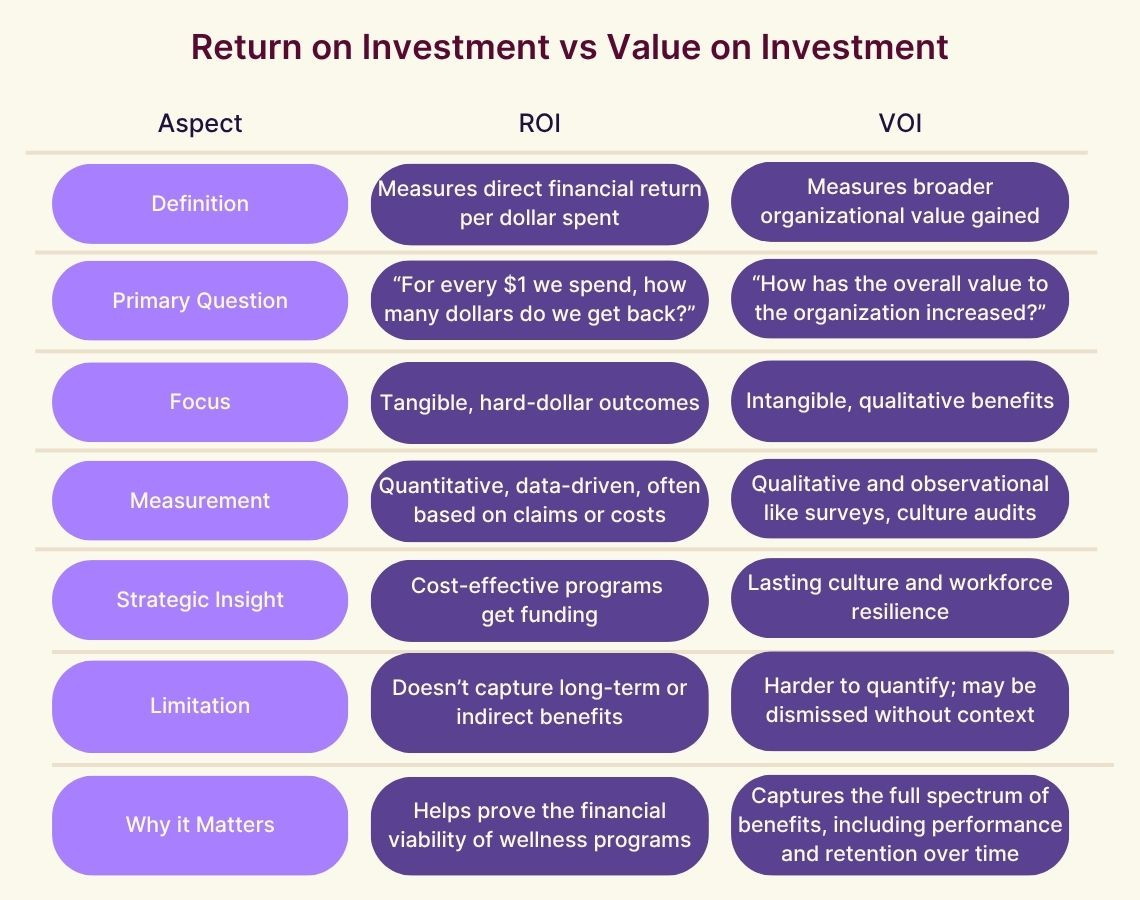
A good corporate wellbeing program should meet its goals. That’s why HR leaders need to show how their efforts make a difference. ROI (Return on Investment) and VOI (Value on Investment) are both useful for this, but they measure different kinds of success.
Return on investment
ROI, or Return on Investment, looks at the direct financial return of a wellness program. It shows whether the savings and benefits exceed the costs. Usually, ROI is calculated by comparing the program's costs to outcomes such as healthcare savings or lower turnover costs.
For example, if your wellness program costs £100,000 and you save £150,000 in lower medical claims and sick pay, that’s a 1.5:1 ROI, or a 150% return. Many companies are seeing strong results: 95% of employers who track wellness ROI report positive returns. More than half get over £2 back for every £1 spent when they include healthcare savings and productivity gains. Important ROI metrics include yearly healthcare spending, number of sick days, workers’ comp or disability claims, and turnover rates. Lower turnover saves money because hiring new employees is expensive.
A recent analysis found an average ROI of £1.50 for every £1 invested in wellness, and even higher returns—up to £3.80 for every £1—for targeted disease management programs. The main point is that, when done well, wellness programs can pay for themselves through real savings.
Value on investment
VOI, or Value on Investment, measures the wider and less obvious benefits of wellness programs. These include better employee morale, higher engagement, more innovation, and a stronger company reputation.
This is important because not everything that matters can be measured in financial terms. VOI captures these “softer” results that are key to long-term success. For example, if your wellness program greatly improves team morale, you might see higher customer satisfaction or better work quality, even if you can’t put a dollar value on it. Common VOI benefits include better engagement, resilience, and a stronger employer brand.
You can measure VOI through surveys and trends, such as changes in employee engagement scores, self-reported stress, job satisfaction, or eNPS (employee Net Promoter Score). You can also track if departments with high wellness participation see better performance or creativity.
More organizations are recognizing these broader benefits—62% of companies now prioritize employee well-being and purpose over cutting costs. In short, culture and human impact are valued alongside financial results. VOI is about the story behind the numbers: a healthier, happier workforce that leads to long-term success.
A strong wellness program measures both ROI and VOI. ROI gives you clear numbers to support your business case, while VOI shows the full range of positive changes. When you share results, give a complete picture. For example: “Healthcare costs decreased 5% this year, saving £200K (ROI), and our employee engagement scores rose 10 points and voluntary turnover dropped 3 percentage points (VOI).” Together, these numbers show that wellness is not just a cost. It is an investment that brings financial returns and a more engaged workforce.
Key metrics to track
- Participation rates: Percentage of employees using the program
- Health indicators: Aggregate improvements in weight, blood pressure, etc.
- Absenteeism and presenteeism rates: Trends in sick days and on-the-job productivity
- Employee retention: Changes in turnover rates
- Employee feedback: Wellbeing scores and sentiment in surveys
Examples of Wellness Program Wins
- Productivity & cost savings: Sick days drop 20% after introducing wellness days or on-site flu shots
- Loyalty boost: Engagement survey shows sharp increase in “I would recommend my company as a great place to work.”
Best Practices for Measurement
- Start with baseline data: Measure key metrics before launching initiatives to track true changes
- Continuous improvement: Review data regularly and refine programs
- Double down on what works: Keep high-attendance programs like popular virtual fitness classes
- Rework low-engagement areas: Adjust topics or format for underperforming programs (e.g., financial webinars)
Employee Input
- Ask regularly: What do employees value most?
- Identify barriers: Understand what keeps them from participating
- Iterate: Use insights to evolve your wellness strategy for stronger ROI and VOI over time
4 tips to build the best corporate wellness program for your company
You can create a health and wellbeing program that really supports your team. The best approach depends on your industry, workplace, budget, and company size. Here are four simple tips to help you build a program your team will actually use.
1) Factor in the size of your organisation
When deciding which wellbeing benefits to offer, consider the size of your business.
Larger companies might invest in on-site facilities or expand their service offerings. Smaller organisations often do better with flexible, affordable options.
2) Ask employees what they actually want
Before you begin, ask your team which benefits they would really use.
A quick survey can reveal what matters most, like fitness support, mental health resources, flexible working, nutrition, or financial wellbeing. This helps you build a programme based on real needs, not guesses.
3) Keep the experience simple
The best corporate programmes are easy to understand and use.
If you offer gym access, events, classes, or wellbeing services, make the process quick and clear. If employees can sign up for sessions or activities, give simple instructions and avoid extra steps.
4) Document it in your employee handbook
Once your program is ready, explain it clearly in your employee handbook and onboarding materials.
List what’s available, who can use each benefit, how to access them, and where to ask questions. This helps new employees know what support they have from the start.
Corporate wellbeing is the strategic advantage HR can't afford to overlook
As healthcare costs goup, turnover remains high, and employees expect more, HR teams are rethinking their benefits strategy. Supporting employee wellbeing has become essential.
A good corporate wellbeing program can help with these challenges. Companies with holistic support are 90% more likely to see a positive ROI, and 91% of HR leaders say their programs cut healthcare expenses.
Looking for the best wellbeing solution? Thousands of companies and users in the UK and worldwide choose Wellhub for their corporate wellness programs. Get a free quote today to see how you can lower costs, keep top talent, and create a workplace where your people thrive.
Category
Share

The Wellhub Editorial Team empowers HR leaders to support worker wellbeing. Our original research, trend analyses, and helpful how-tos provide the tools they need to improve workforce wellness in today's fast-shifting professional landscape.