Workplace Wellbeing: 15 initiatives & ideas for UK companies
Last updated on 6 Mar 2026

People in the UK spend about 3,507 days at work over their lifetimes, including 204 days of overtime. With so much time at work, it’s easy to see why workplace wellbeing is important. Our work experience can have a big impact on our health, motivation, and overall quality of life.
For employers, supporting wellbeing in the workplace is now essential. Higher stress, burnout, poor work-life balance, and new employee expectations have made it a real business challenge. How work is set up, the support employees get, and the daily culture all affect whether people stay healthy, engaged, and productive.
This guide explains what workplace wellbeing means, why it matters for both employers and employees, the main challenges organisations face, and proven ways to build a healthier workplace.
What is workplace wellbeing?
Workplace wellbeing is about the overall physical, mental, emotional, and social health of employees at work. It includes how people feel about their jobs, their relationships with colleagues and managers, their working conditions, and how work is organised. In short, workplace wellbeing shows whether employees feel safe, supported, engaged, and able to do their best.
According to the International Labour Organization, workplace wellbeing includes all aspects of working life—from the quality and safety of the physical work environment to employees’ experiences of the organisational climate, job design, and work organisation. The aim is to ensure employees are not only safe but also healthy, satisfied, and engaged in their roles.
Workplace wellbeing goes beyond traditional health and safety. Safety rules help prevent injuries or accidents, but wellbeing also includes mental health, job satisfaction, work relationships, and how work fits with personal life.
Many things affect workplace wellbeing, like leadership style, management practices, workload, workplace culture, and job design. Supportive leaders, fair policies, and healthy conditions help employees stay resilient, motivated, and perform well over time.
Investing in workplace wellbeing is not only the right thing to do, but also a smart business decision. Research shows that employee wellbeing is closely linked to better performance and long-term success, making it a top priority for any organisation.
What does workplace wellbeing include?
Workplace wellbeing includes distinct, connected areas: general psychological wellbeing (happiness, purpose, life satisfaction), work-specific wellbeing (engagement, burnout, job satisfaction), and work–life wellbeing (how work aligns with family and personal responsibilities).
Effective workplace wellbeing strategies typically address core dimensions like:
- Physical health: This includes safe working conditions, ergonomic workspaces, and programs that support healthy habits, like wellness initiatives or access to health support. Making sure employees feel physically safe and supported is a basic part of wellbeing.
- Mental and emotional wellbeing: Organisations can help by offering stress management programs, resilience training, and access to mental health resources. Supportive policies and open conversations about mental health also help reduce stigma and prevent burnout.
- Social relationships and organisational wellbeing: A positive workplace culture is important. This includes supportive leaders, respectful relationships, clear communication, and a sense of belonging and purpose at work.
- Work-life balance and job design: Wellbeing depends on how work is organised. Flexible schedules, remote or hybrid options, and reasonable workloads help employees balance work and personal life while staying engaged and performing well.
Together, these elements create a work environment where employees feel safe, valued, and able to thrive. This benefits both individuals and the organisation’s performance.
Why is wellbeing important in the workplace?
Workplace wellbeing is a key priority for organisations because it directly affects employee performance, retention, workplace culture, and business costs. When employees have good mental and social wellbeing, they are more engaged, proactive, and likely to stay with their employer. On the other hand, companies that ignore wellbeing often see more burnout, absenteeism, and staff turnover.
Higher productivity and better performance
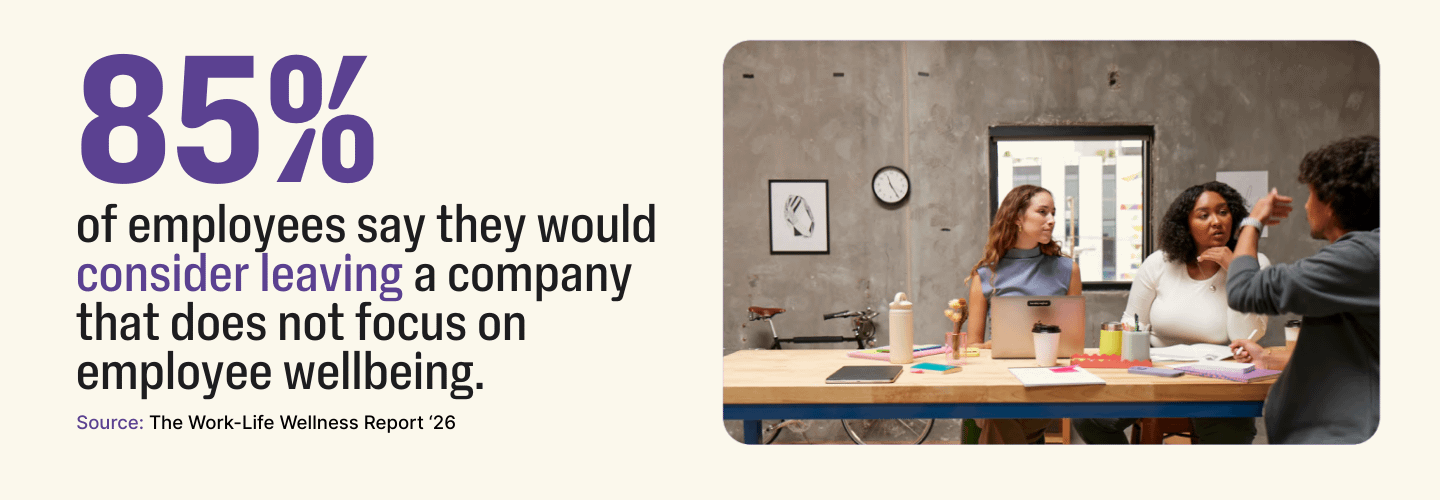
Wellbeing at the workplace has a big impact on productivity. In fact, 89% of employees say they do better at work when they focus on their wellbeing, showing a clear link between health and performance.
Business leaders see this connection too. About 56% of CEOs invest in wellbeing initiatives to boost employee productivity, and almost all report at least some productivity gains from their wellness programs. When employees have the energy, focus, and mental resilience to handle their workload, they can perform better and contribute more to the organisation’s goals.
Stronger talent attraction and retention
Workplace wellbeing also plays a crucial role in attracting and retaining employees. Surveys show that 8 out of every 10 employees would only consider companies that prioritise wellbeing when looking for a new job, making it a key factor in employer attractiveness.
Organisations that support wellbeing usually keep employees longer, since people are less likely to leave workplaces that care about their health, balance, and growth. Companies that ignore wellbeing risk losing talent to those with healthier, more supportive environments.
Lower costs through reduced burnout and absenteeism
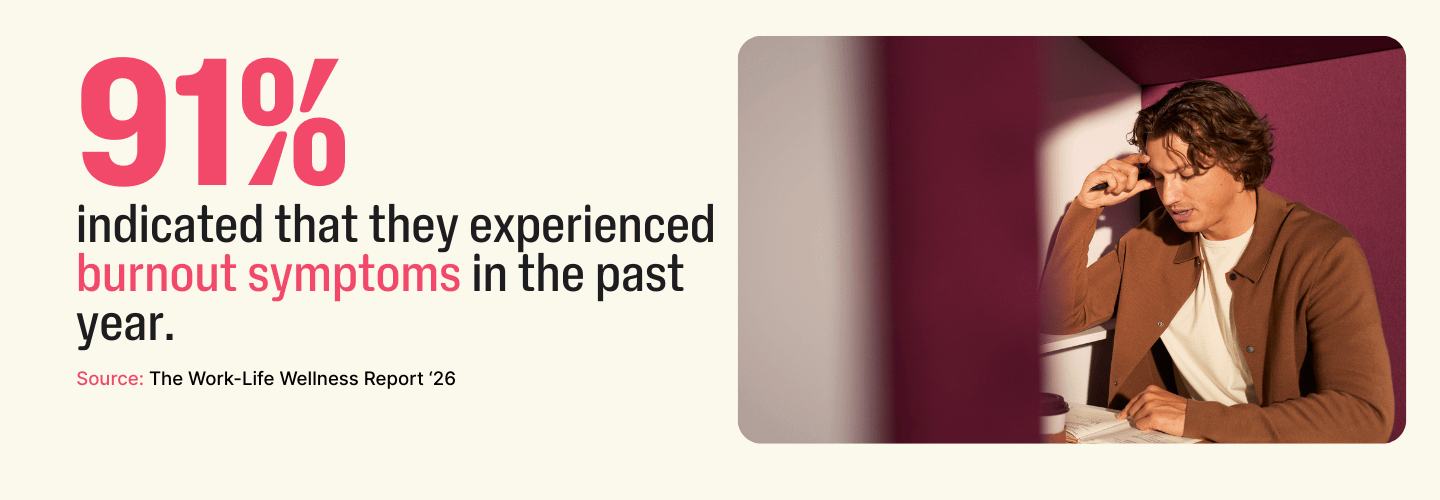
Poor workplace wellbeing can be very costly for organisations. High stress and burnout lead to disengagement, absenteeism, and staff turnover. In fact, burnout-related productivity losses cost businesses hundreds of billions of euros each year, making employee wellbeing a major economic concern.
Good workplace wellbeing programs can help lower these costs by improving health, reducing absenteeism, and supporting employees before stress and burnout become long-term problems.
A healthier and more positive workplace culture
Finally, wellbeing incentives also help build a culture of trust, belonging, and support. When organisations embed employee wellbeing stratgies into leadership, policies, and daily routines, employees are more likely to feel valued and connected at work. Integrating wellbeing into workplace culture strengthens relationships, improves collaboration, and creates more resilient teams that can adapt to change.
Over time, this culture of wellbeing benefits both employees and organisations by creating an environment where people can thrive while delivering sustainable business results.
15 wellbeing initiatives in the workplace (you can start implementing)
Companies are starting to recognise that workplace wellbeing requires more than a single action or policy. Effective wellbeing ideas combine workplace initiatives, wellness activities, and practical ideas that support employees’ physical, mental, emotional, and social health. Overall, most effective approaches combine structural improvements—such as better job design, leadership support, and flexible working—with everyday actions that help employees feel healthier, more connected, and active.
Here are 15 workplace wellbeing initiatives and ideas that HR leaders and managers can use to support their teams:
- Flexible working arrangements
Flexible schedules, hybrid work, and remote options are some of the best ways to support wellbeing. They help employees manage work-life balance, reduce stress, and work in ways that fit their needs.
Do you know? When asked which flexible working arrangements they would take advantage of if they were available, UK employees highlighted several options. The most popular was a four-day working week with no reduction in pay (45%), followed by compressed hours (25%) and flexitime (20%).
- Mental wellbeing support programmes
Mental wellbeing support programmes have become an important part of workplace wellbeing strategies. As exhaustion and burnout increase, more organisations are offering structured support to help employees manage psychological and emotional challenges.
This programmes can include employee assistance programmes (EAPs), counselling, online therapy, mental health days, and digital tools like mindfulness or meditation apps. Some organisations also provide stress-management workshops or resilience training to help employees build coping skills and emotional strength.
Early intervention and open communication are important as well. More employers are training managers to notice signs of stress, talk about mental health, and create safe spaces where employees feel comfortable asking for help. Leadership and workplace culture play a significant role in helping employees feel safe discussing mental wellbeing.
- Resilience and stress-management training
Resilience and stress-management training helps employees handle pressure, adapt to change, and care for their wellbeing in tough work environments. While organisations should also address workload and job design, these initiatives give employees practical tools to manage daily stress. They are especially useful in workplaces with heavy workloads, poor communication, or little flexibility.
These training programmes usually teach practical skills like stress awareness, emotional control, mindfulness, problem-solving, and healthy coping habits. Resilience is not just something people are born with. It can be built through training and practice. Mindfulness, meditation, adaptability, and problem-solving can help employees handle stress better and improve their wellbeing over time.
For lasting results, resilience training should be included in a wider employee wellbeing plan, not used on its own. When employers add supportive leadership, open communication, and a culture that values recovery and healthy boundaries, people are more likely to use what they learn. This makes resilience and stress-management training a strong way to support long-term wellbeing, engagement, and performance.
- Workload and job design improvements
Managing workloads and designing jobs thoughtfully helps support wellbeing at work. When everyone knows their role and has a reasonable workload, they can focus on what matters most without feeling overwhelmed or unsure. Poor job design, on the other hand, can lead to stress, confusion about responsibilities, and less engagement.
Organisations can help by regularly checking workloads, setting clear expectations, and giving employees greater say in how they work. Setting realistic deadlines, clarifying priorities, and involving employees in decision-making can reduce stress and improve performance and job satisfaction.
- Ergonomic workspaces
A healthy workspace is an important workplace wellbeing initiative. Ergonomic setups help prevent strain, muscle issues, and fatigue from prolonged sitting or repetitive tasks. Simple changes to chairs, desks, lighting, and screen height can make employees more comfortable and support their long-term health.
Employers can support healthy habits by encouraging regular breaks and movement throughout the day, and by ensuring both office and remote workers have the right equipment. When employees feel comfortable and supported, they can focus better, have more energy, and stay productive.
- Regular wellbeing check-ins
Regular wellbeing check-ins between managers and employees help create a culture where people can talk openly about how they’re doing. These conversations give employees a safe space to share challenges, discuss workloads, and raise concerns before small issues become bigger problems.
Managers play a key role in making these check-ins meaningful. By listening closely, asking open questions, and offering practical help, they build trust and stronger team relationships. Over time, regular wellbeing talks help organisations notice early signs of stress and take action before problems grow.
- Employee recognition programmes
Recognition programmes are great for boosting motivation and morale at work. When people feel valued for what they do, they are more likely to stay engaged, committed, and happy in their jobs. Recognition can take the form of formal rewards, peer shout-outs, or a simple thank-you from a manager.
Regular recognition also helps build a stronger workplace culture. Celebrating wins, highlighting good work, and encouraging positive feedback help employees feel valued and connected to the company’s goals. When people feel appreciated, motivation and teamwork improve.
- Social connection activities
Social wellbeing is a key part of overall workplace wellbeing. Good relationships with colleagues help everyone feel supported, less isolated, and improve teamwork.
In today’s workplaces, especially with hybrid or remote work, making time for connection is more important than ever. Organisations can encourage social connection through team events, mentoring programmes, peer support networks, and informal gatherings. These activities help employees build relationships beyond day-to-day tasks, fostering a stronger sense of belonging and improving collaboration across teams.
- Physical wellness activities for the workplace
Encouraging daily physical activity benefits both physical and mental health. Walking meetings, stretch breaks, fitness challenges, andexercise classes can help your teams stay active during the day and avoid the negative effects of sedentarism.
Regular movement can improve focus, reduce fatigue, and boost energy. When organizations make it simple and appealing for everyone to be active, employees are more likely to develop healthy habits that benefit their wellbeing and their work.
Don't miss this article: Wellness Wednesday: 30+ ideas to boost your staff wellbeing at work
- Mindfulness and mental health workshops
Mindfulness and mental health workshops give employees practical ways to manage stress and stay focused during busy times. Activities like meditation, breathing exercises, and guided reflection can help people find calm and think clearly during the workday. These sessions also help create a culture of wellbeing by making it normal to talk about mental health.
When organisations give employees space to learn relaxation-management skills and talk openly about emotional wellbeing, it reduces stigma and encourages people to care for their health.
- Career development opportunities
Chances to learn and grow at work are important for wellbeing. Employees feel more motivated and engaged when they see clear ways to develop and advance within their organisation. Training, mentorship, and internal mobility opportunities help employees build skills and work toward meaningful career goals.
When organisations invest in employee development, they improve retention and help people feel a stronger sense of purpose and fulfilment at work.
- Clear communication and employee voice
Clear communication is essential for building trust and a safe workplace. When employees know what’s going on and can share their views, they feel more valued and involved.
Encouraging employee voice through surveys, feedback sessions, and open forums helps organisations spot concerns and improve workplace practices. Letting employees have a say in decisions that affect their work strengthens collaboration and builds a more inclusive culture.
- Psychological safety and a support culture
Psychological safety occurs when employees feel safe to share ideas, ask questions, and admit mistakes without fear of blame or negative consequences. When people feel this way, they are more likely to work together, try new things, and help each other.
Establish clear rules against harassment and bullying, and require leaders to act with respect and fairness. Actively encourage respectful behavior and address toxic behavior to build a healthier, more productive workplace.
- Healthy workplace policies
Workplace policies are important for employee wellbeing. Policies such as flexible leave, mental health days, family-friendly benefits, and wellness allowances demonstrate that the organisation values employees’ health and personal responsibilities.
When these policies are applied consistently and supported by leaders, they help employees manage both work and personal commitments more easily. This leads to better work-life balance and lowers the risk of burnout.
We recommend you reading: Best corporate wellness programs in 2026 for UK companies
- Leadership training for supportive management
The way leaders act has a big impact on employee wellbeing. Managers who communicate clearly, support their teams, and show empathy create workplaces where people feel safe and motivated to do their best.
Leadership training helps managers learn skills such as active listening, conflict management, and supportive communication. When leaders set a good example and put wellbeing first, they create a culture where employees feel respected, valued, and able to succeed.
The 6 biggest workplace wellbeing challenges in 2026
Many companies know employee wellbeing is important, putting effective strategies in place can be complex. Wellbeing at work depends on how employees experience their environment, their roles, and their relationships within the organisation. This is one of the most common challenges organisations face when trying to improve workplace wellbeing.
Toxic workplace culture
A toxic organisational culture is one of the biggest barriers to workplace wellbeing. Behaviours like incivility, harassment, bullying, and disrespect can erode trust and create a negative work environment. Even small acts of disrespect can add up over time, leading to stress, disengagement, and lower wellbeing.
Excessive workload and job demands
Heavy workloads, unrealistic deadlines, and poorly designed roles can seriously harm employee wellbeing. When job demands exceed the time, autonomy, or support employees have, stress and burnout are more likely. Poor job design is a common challenge for workplace wellbeing.
Lack of supportive leadership
Leadership behaviour is key to workplace wellbeing. If leaders do not communicate clearly, give recognition, or create psychological safety, employees may feel undervalued or unsupported. Supportive leadership styles, such as authentic or transformational leadership, are associated with higher employee wellbeing and engagement.
Trust between employees, managers, and the organisation is essential for wellbeing at work. When expectations or agreements are broken or unclear, trust drops. This can lead to disengagement, lower motivation, and negative feelings about the workplace.
Poor work-life balance
Conflicts between work and personal life are another big challenge for workplace wellbeing. Long hours, rigid schedules, and the constant expectation of being available can increase stress and make it harder for employees to recover outside of work.
Workplace loneliness and lack of connection
Modern work environments, especially hybrid or remote workplaces, can increase feelings of isolation. A lack of meaningful social relationships at work can hurt psychological wellbeing, motivation, and engagement.
Difficulty integrating wellbeing into organisational strategy
Many organisations find it hard to make wellbeing part of everyday management. Workplace wellbeing works best when it is built into organisational governance, leadership behaviours, and workplace systems, not just offered as separate programs.
Overall, these challenges show that workplace wellbeing is not just about offering initiatives or activities. It requires broaderorganisational changes, such as healthier leadership, better job design, and stronger workplace cultures that support employees’ long-term health and performance.
Improve your results with a workplace wellbeing programme
Major workplace issues such as burnout, high stress, poor work-life balance, low trust, and weak engagement cannot be fixed with quick perks. These problems require a structured programme that supports employees’ physical, mental, emotional, and social wellbeing, and also improves how work is organized and managed.
A good workplace wellbeing program turns healthy actions into a key part of business success, not just a way to fix problems. When companies support wellbeing at work, they see higher productivity, fewer absences, better employee retention, and a stronger reputation. It helps to offer flexible options, mental health support, opportunities for movement and rest, social connections, and healthy routines. Employers benefit most when these supports are easy to use and fit into daily routines.
The right program helps people feel better, work better, stay with the company longer, and contribute more. Wellhub makes this change practical and easy to scale. It gives UK employees access to gyms, studios, personal training, and wellness apps all in one place, so employers can offer a single wellbeing benefit instead of juggling several solutions.
Wellhub’s platform supports employee wellness, helps prevent health issues, attracts and keeps top talent, and gives teams flexible wellness options that fit their routines.
The wellness plans employees love to make resolutions last
Wellhub offers the best fitness, mindfulness, nutrition, and sleep options all in one affordable subscription to make 2026 your healthiest year yet.
Category
Share

The Wellhub Editorial Team empowers HR leaders to support worker wellbeing. Our original research, trend analyses, and helpful how-tos provide the tools they need to improve workforce wellness in today's fast-shifting professional landscape.
You May Also Like

Wellness Incentives: Guide and 30 ideas for all budgets
Discover 30 wellness incentive ideas for every budget, plus a practical action plan to launch a successful programme in 2026.

Employee Wellness Programme: Guide for UK HR Leaders
Build a wellness programme your employees actually use. Get 30+ ideas, a simple launch plan, and ROI metrics to prove impact.

Employee wellbeing survey in 2026: 120 sample questions +tips
Discover how to run an effective employee wellbeing survey, why it matters, and 120 questions to improve wellbeing at work.